By Rick Wolcott*
Love requires listening and listening requires love. Sound simple? Yes. Easy to put into practice? Not always.
In resourcing pastors, congregations, and faith communities to live into our shared East Ohio Conference vision, the Connectional Ministries team brought in Rev. Luke Edwards to lead a workshop teaching the principles of his Listening Church resource. It was Edwards who spoke of the relationship between love and listening.
“Truly listening to people is a gift that we can give to people in our churches and communities regardless of how many resources we have,” said Rev. Beth Ortiz, Strategic Ministries director in the Connectional Ministries office. “The power of listening to others should not be underestimated and it should be valued, practiced, and woven into the DNA of who we are as United Methodists.”
She and Rev. Kathy Dickriede, Connectional Ministries office Missions & Community Engagement director, thought that Edwards’ knowledge and experience would greatly benefit laity and clergy leadership in East Ohio. So, they invited the associate director of Church Development for the Western North Carolina Conference of The United Methodist Church to lead the Listening Church Resource workshop in six different locations over three days across East Ohio.
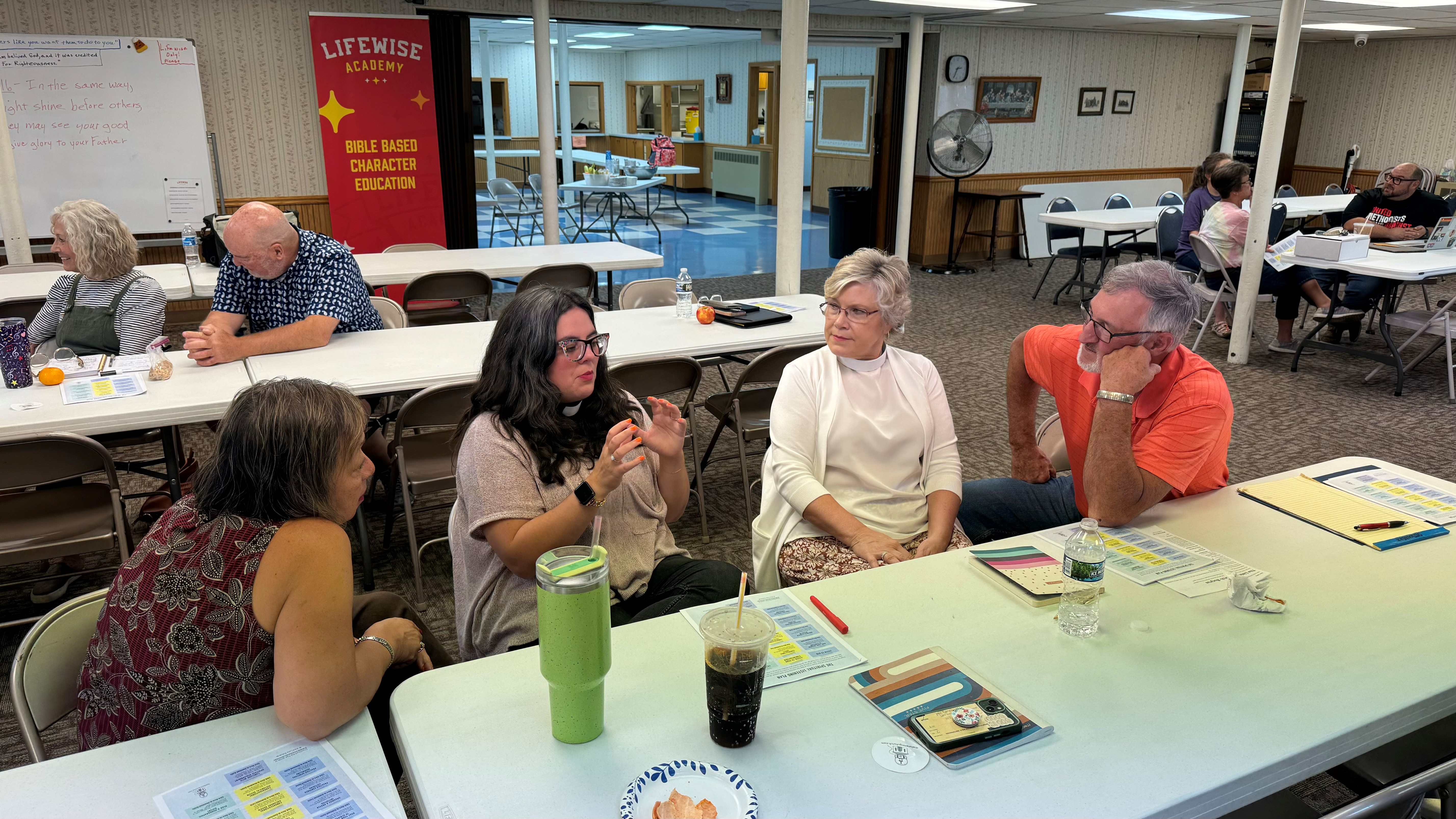
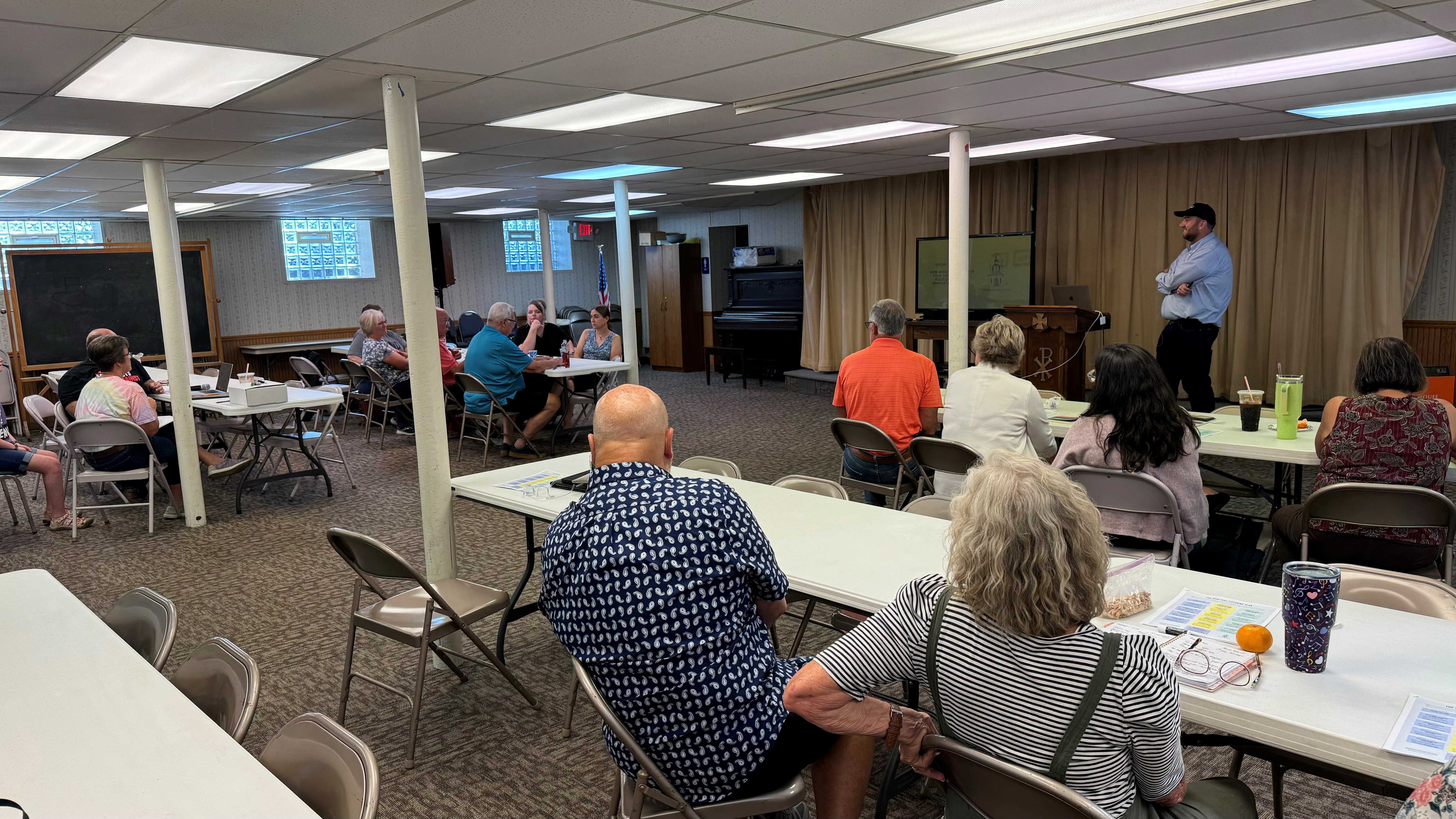
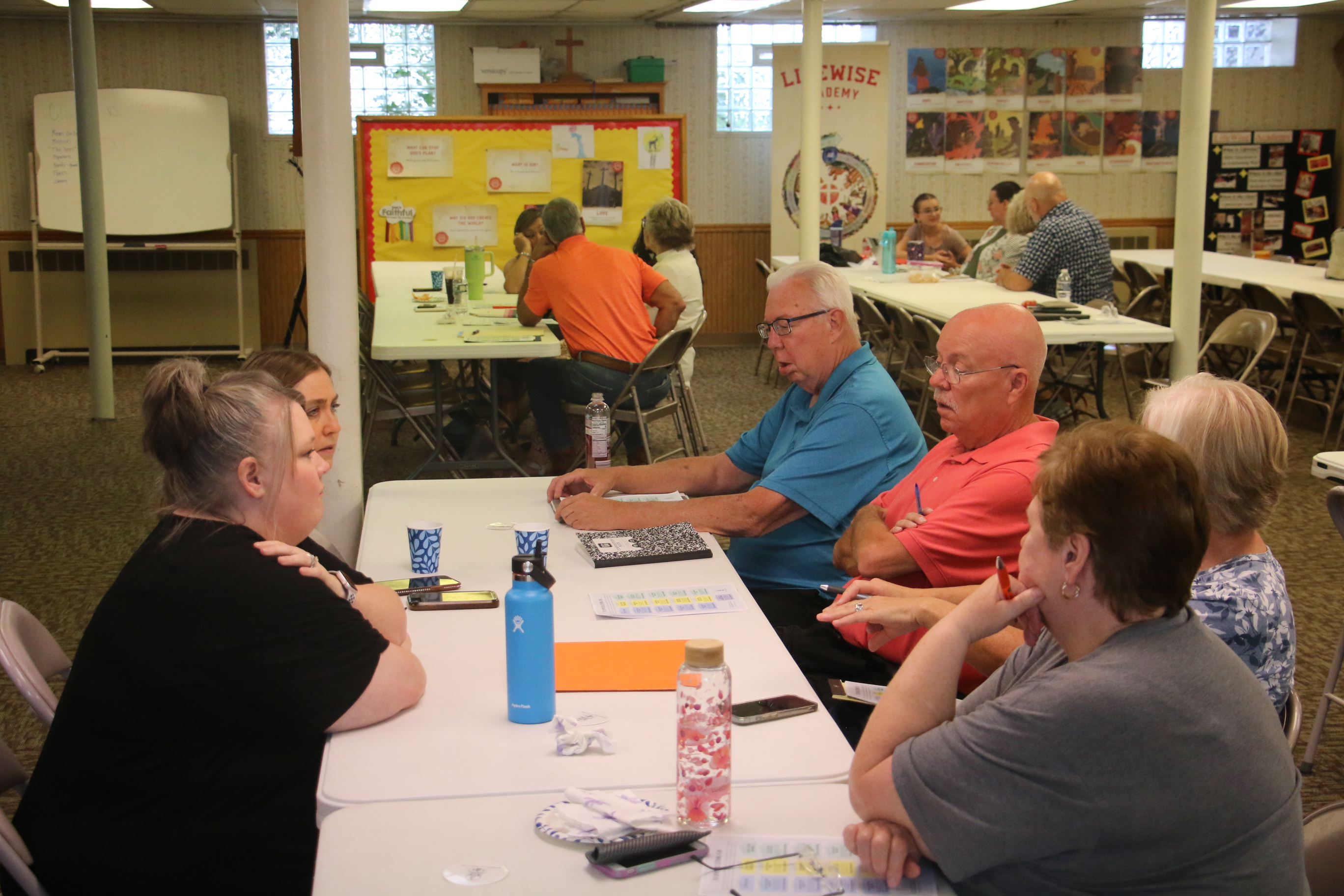
“Listening Church is a resource to help churches to listen to God, listen to their congregation, and then listen to their neighbors to help discern next steps in ministry – that could be to start something new, to let go of something old, or to make a ministry pivot. Churches are utilizing it when they get stuck, when they feel disconnected from their neighbors, when they just kind of need a breath of fresh air that allows them to infuse listening into their ministry,” Edwards shared prior to the workshop at North Olmsted UMC (Northern Waters District). “We’ve found that in bringing those three things together God typically has a fairly clear invite for the church by the end of it.”
In explaining the five building blocks of a listening church – love, curiosity, attention, proximity, and openness – Edwards highlighted the importance of paying attention to God and our surroundings both inside and beyond the walls of our church buildings.
“Listening requires attention, and we are a very distracted society. The phones in our pockets are vying for our attention constantly. There are engineers and psychologists who are designing apps and phones to maximize drawing us into them and to stay in them as long as possible. So, we are literally facing a psychological war for our attention,” he said to those at the Bucyrus UMC (West Plains District) workshop.
Time moves quickly and when we are distracted, we don’t notice changes in ourselves let alone in our surroundings.
“Our churches have been planted into a specific time, a specific place, a specific culture and pretty much immediately the world started changing around it. So, I think about demographic changes that have happened in our communities, folks who have moved in, folks who have moved out, economic changes, generational changes and cultural changes. I think a lot of our churches are stuck so that disconnect from our neighbors emerges. We don’t know how to connect to our neighbors very well so we wonder if we give them something then the relationship-building will go easier. But I’ve found when we do that the relationship starts in an unequal place and it becomes really hard to move beyond that,” Edwards said.
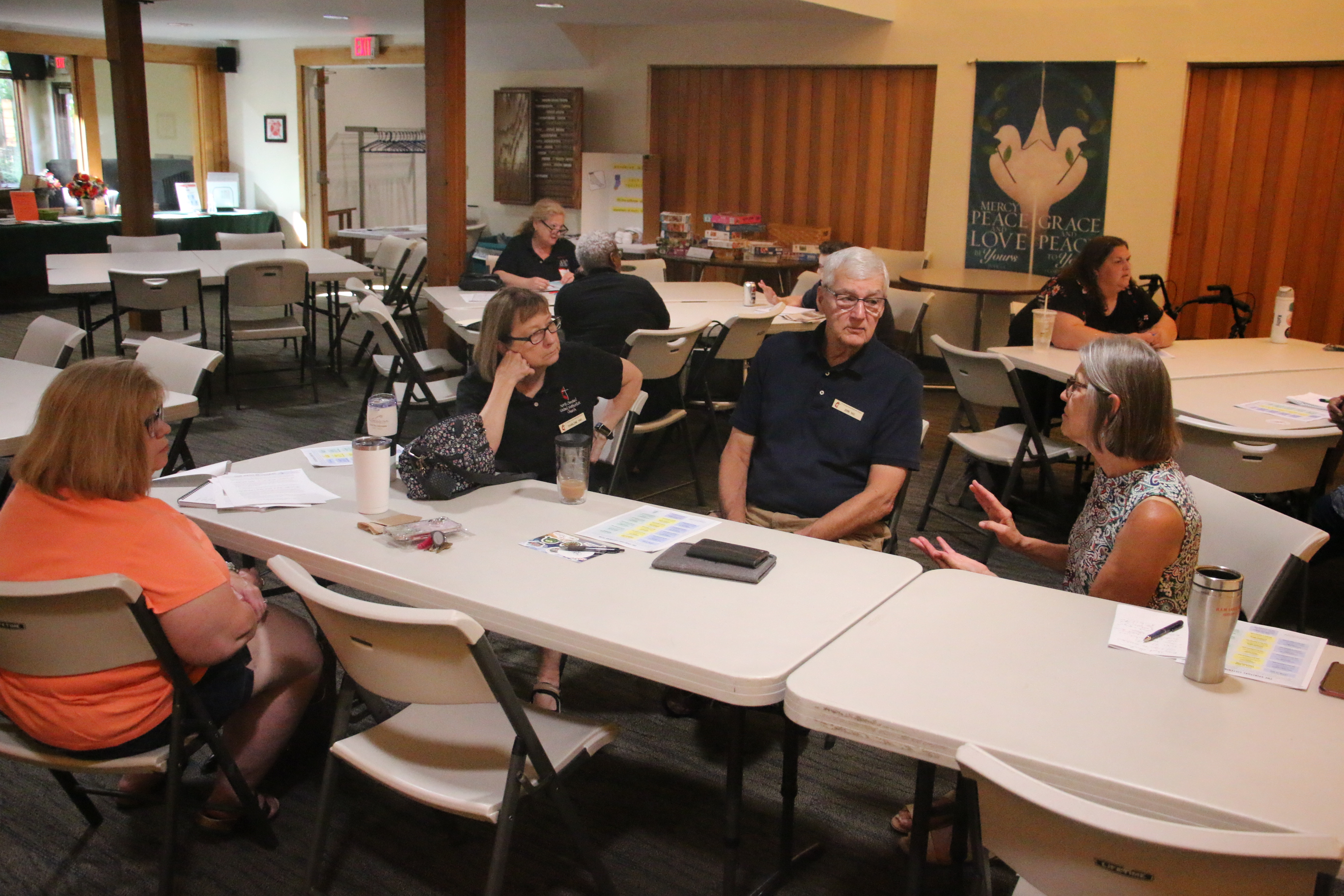
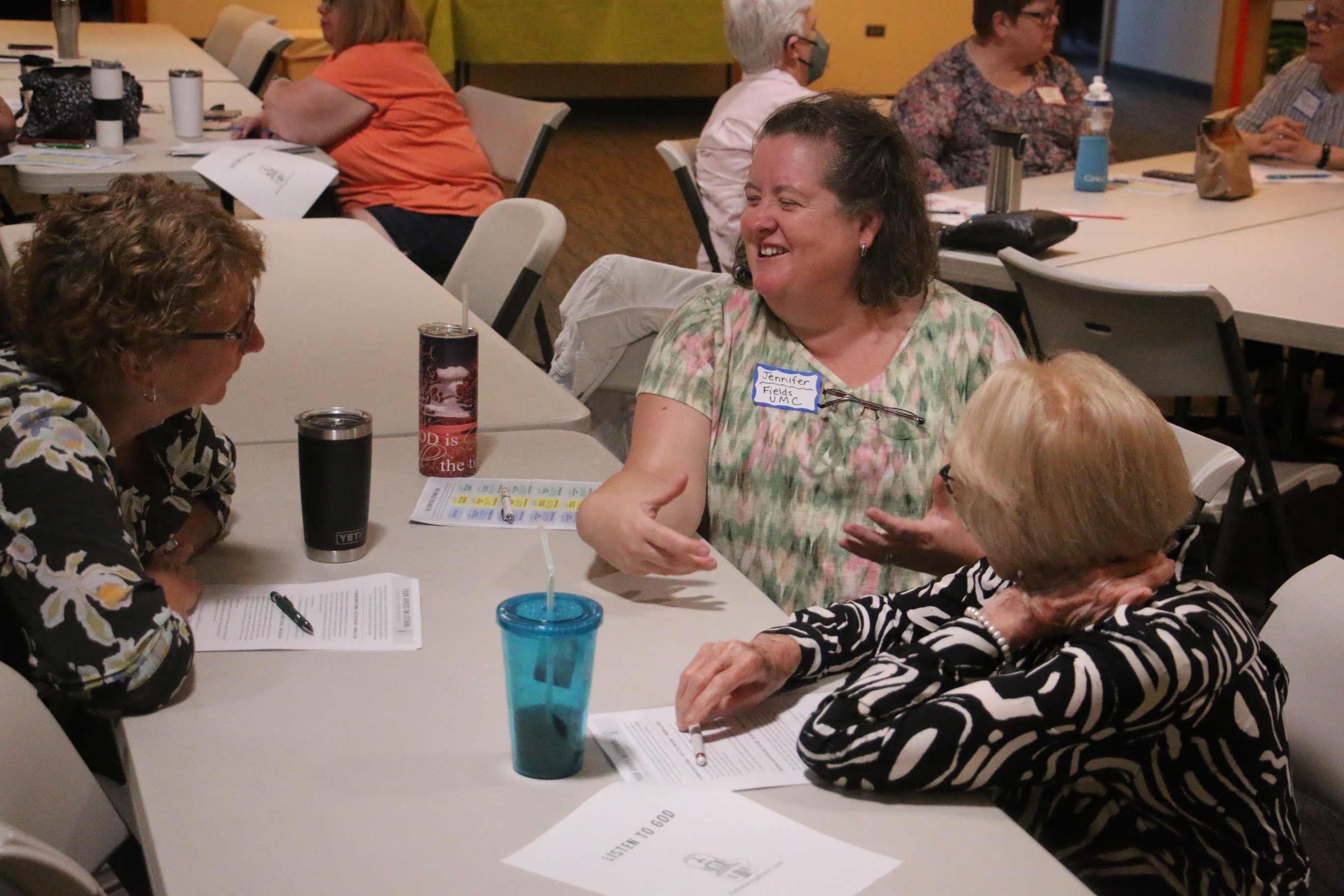
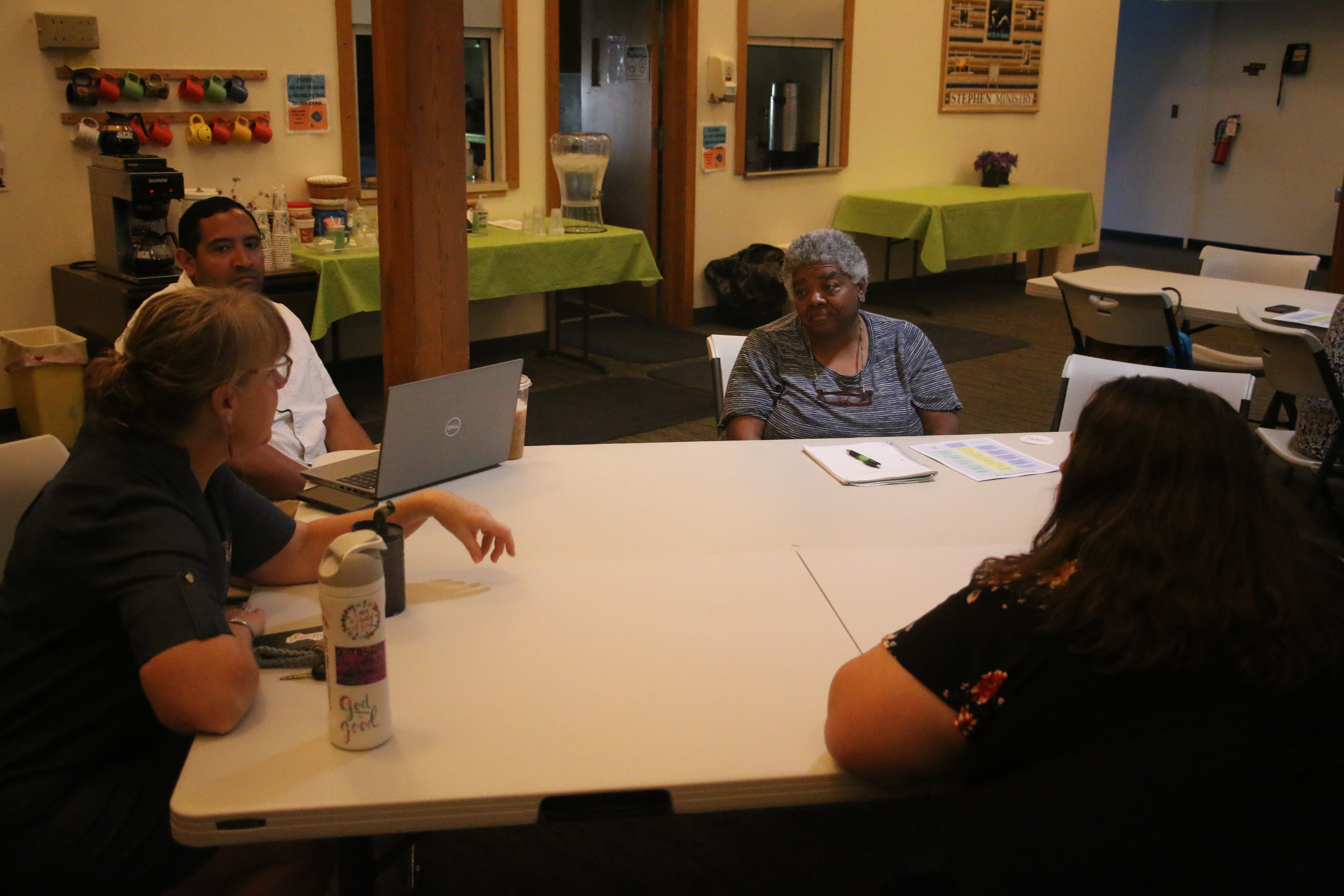
“We need to be listening to God with holy discernment and holy conferencing. That’s not just sitting around having a conversation but it’s really deep listening and getting yourself connected with God and then asking, ‘how do we listen to each other at all levels of the church,’” Dickriede said. “I want us to get curious about our churches, our communities and asset bases not just saying ‘what does our community need from us?’ but ‘what do we need from our community?’ and get on some better equal ground and relationships rather than always feeling like we have to meet a need and do something.”
Edwards said, “Often, we think to reinvigorate our church congregations that we need to tweak things on the inside but what I’ve seen with my work with Fresh Expressions and church development in Western North Carolina is the more we focus on the outside the healthier the inside gets. That’s what Jesus does to us that when we focus outward, we become healthier on the inside. I think a lot of our churches right now are recognizing that if we don’t try something different, we’re going to be in trouble pretty soon.
Melanie Smith, director of Communication & Connection at Brecksville UMC (Northern Waters District) can relate to Edwards’ words.
“The Listening Church resource underlines the importance of seeing our neighbors not as projects to be fixed, but as whole people, created by God,” she said. “How is God already moving in their lives? Listening to their stories is a practical way to share God’s love. So, we’re learning how to do that!”
Brecksville UMC has been using the principles of the Listening Church resource for many months after learning about it through Edwards’ posts on Substack, a publication that combines a personal website, blog, email newsletter or podcast.
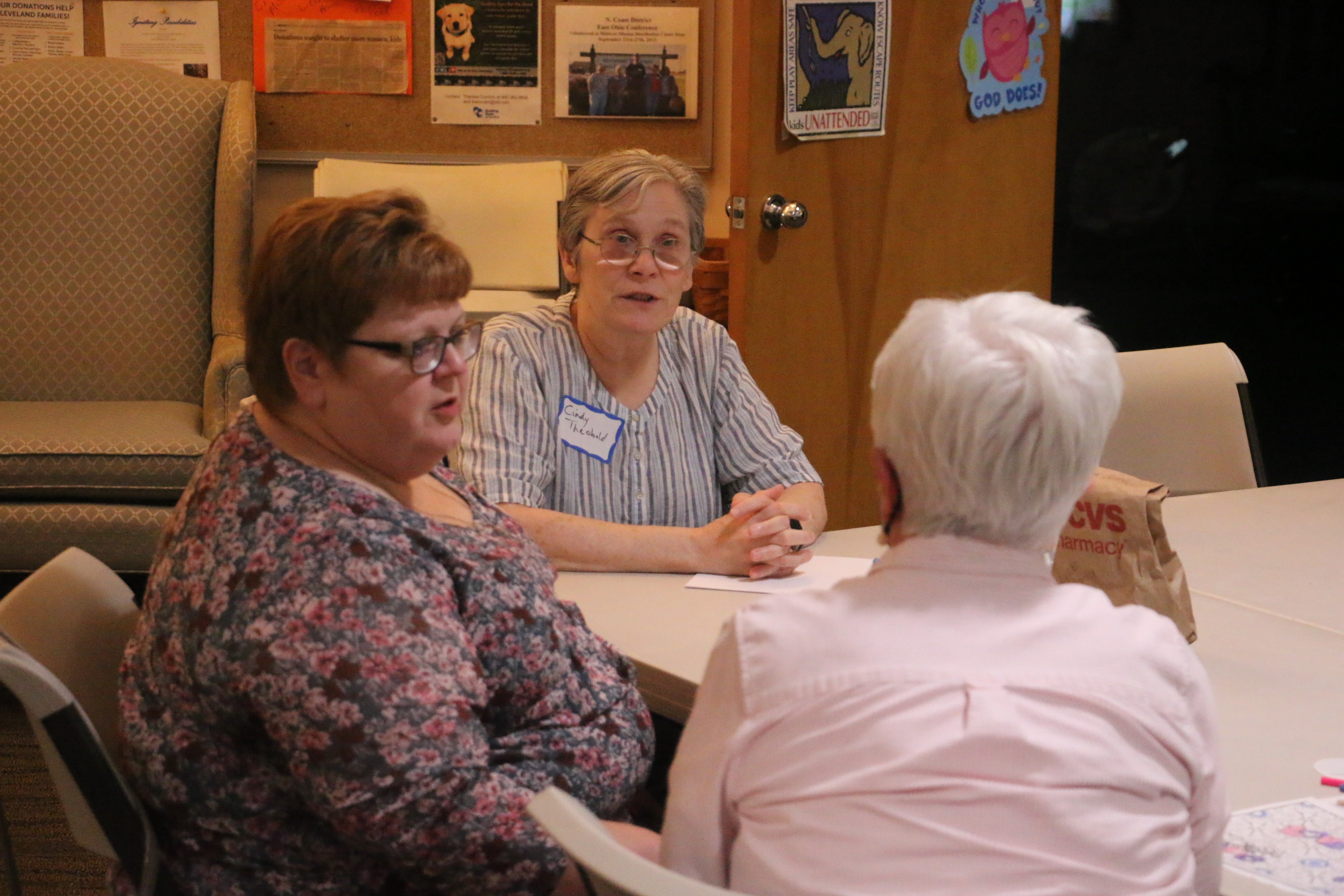
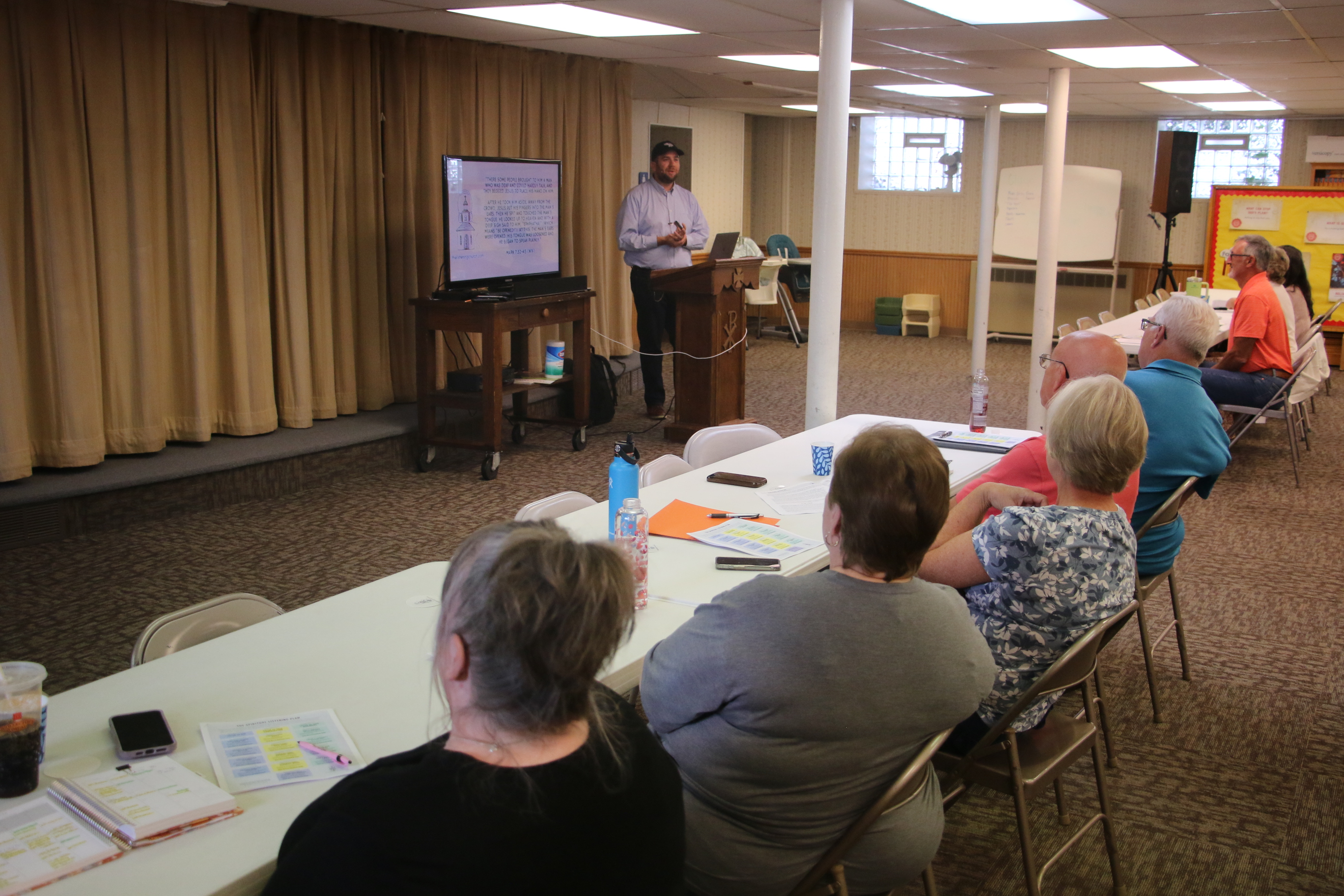
“We have implemented a couple of the exercises, with a breakthrough prayer initiative, a congregational survey, and some historical review,” Smith said. “Luke’s blog posts have served as inspiration and adapting a listening mindset has helped our Missions & Community Engagement team. As a church, we have set a goal for this year to interview and listen to 100 of our neighbors. Attending Luke’s workshop at Poland UMC (Central Valley District) gave us some more tools and the confidence to move forward with our listening goals.”
Edwards instructs that talking with our neighbors is important while emphasizing that what we ask is critical.
“What we ask will influence what we hear. So, if we ask the needs of our communities, we’re going to find needs because there are a lot of needs in our communities. But if we ask more holistic questions, if we see our neighbors as whole people and ask questions about their whole selves then we’ll hear more full answers and we’ll be able to design ministries that connect with the whole person – and I think that should be our goal,” he said.
Ortiz’s message to churches is that it’s never too late to start a conversation with others.
“In a society where isolation and loneliness are an epidemic, by practicing deep listening we can begin to heal and move towards God’s kingdom on Earth.”
The Listening Church resource is free to download and use. Churches are encouraged to do so with the understanding that it is a resource not a panacea, as Edwards stated at the beginning of his workshop: “We’re here today not to save our churches, not to fill our pews, and not to increase our budgets but because we love God, and we love our neighbors. And to love God and love our neighbors we need to listen to God, and we need to listen to our neighbors.”
Learn more about, download, and use The Listening Church resource.
Listen to Rev. Luke Edwards on the Storyboard Podcast.
*Rick Wolcott is executive director of Communications of the East Ohio Conference of The United Methodist Church.
 East Ohio News