By Rick Wolcott*
Nearly 800 delegates from across the worldwide United Methodist Church gathered in Charlotte, North Carolina April 23 – May 3 for the postponed 2020 General Conference, which couldn’t meet because of the COVID-19 pandemic. General Conference, the top policy-making body of The United Methodist Church, meets at the beginning of each quadrennium to consider revisions to church law, adopt resolutions on current moral, social, public policy, and economic issues, and approve plans and budgets for church-wide programs for the next four years.
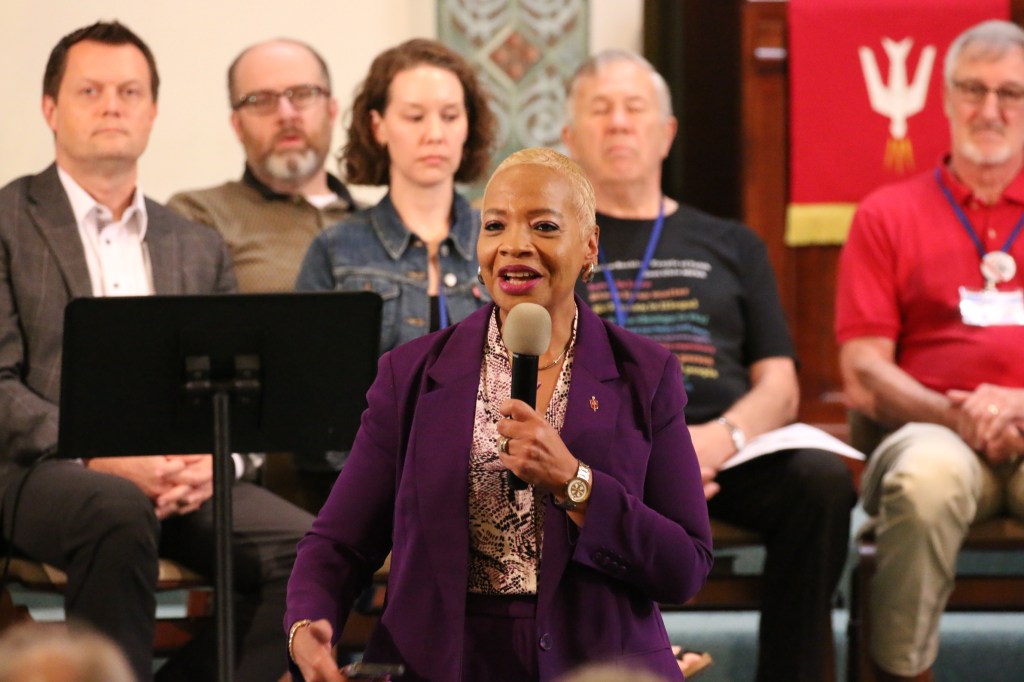
On May 18 laity and clergy from all four districts of the East Ohio Conference attended the Post-General Conference Information Session at Wooster UMC (Central Valley District). Bishop Tracy S. Malone and members of the delegation shared information about four key outcomes of the just-completed General Conference, offered their perspectives about the conference, and then answered questions from those in attendance. The session was recorded, and you can view it by clicking the image below.
Revised Social Principles
Delegates approved the first overhaul of The Social Principles of The United Methodist Church in nearly 50 years. Contained in both the denomination’s Book of Discipline and Book of Resolutions, The Social Principles are statements that reflect official United Methodist teachings on a wide range of topics. The Social Community section of the new revised Social Principles addresses language regarding marriage and human sexuality that has long been considered harmful to individuals within the LGBTQIA+ community. Specifically, the phrase “homosexuality is incompatible with Christian teaching” was removed, and space was created to affirm marriage as a sacred lifelong covenant between two people, or a man and woman, of consenting age.
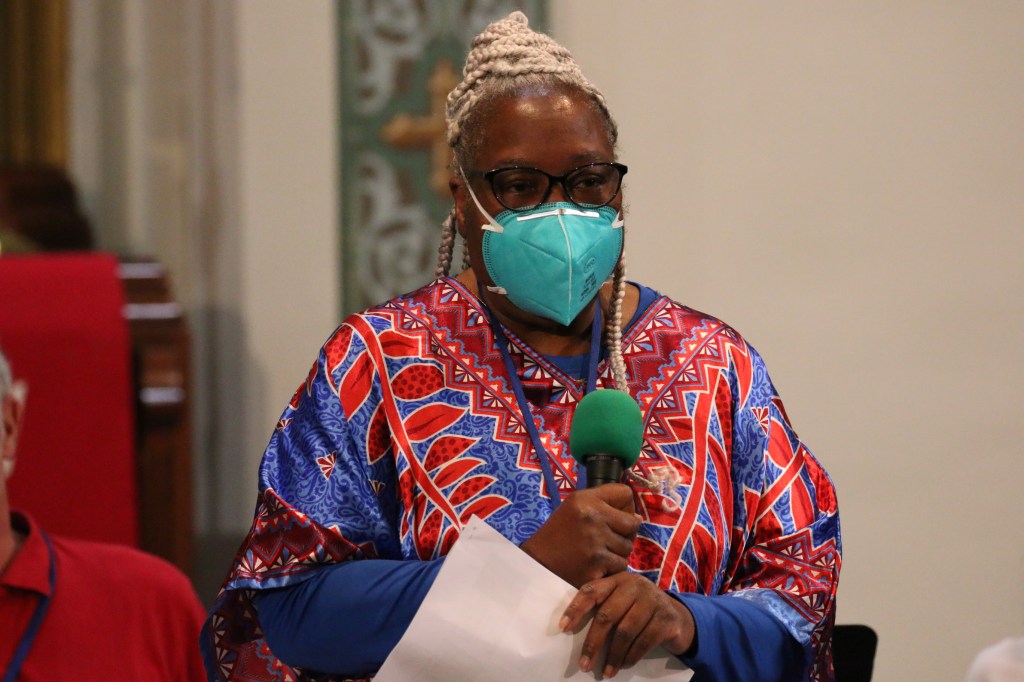
In presenting the updates to The Revised Social Principles at the Post-General Conference Information Session, lay delegate Dr. Martha Banks said, “I had prayed that out of this General Conference we would have a better sense of inclusion for everyone and what was voted on, what was approved far, far exceeded my prayers.”
Removal of Restrictive Language
The General Conference voted by overwhelming majorities to remove from The Book of Discipline of The United Methodist Church discriminatory language and removes bans related to ministry by, with, and for “self-avowed practicing homosexual” clergy. The new language in The Book of Discipline, gives clergy the right to choose which weddings they’ll perform, gives local church boards of trustees the right to determine which weddings to host; and does not prohibit persons from being recommended for ordination because they are in a same-gender relationship.
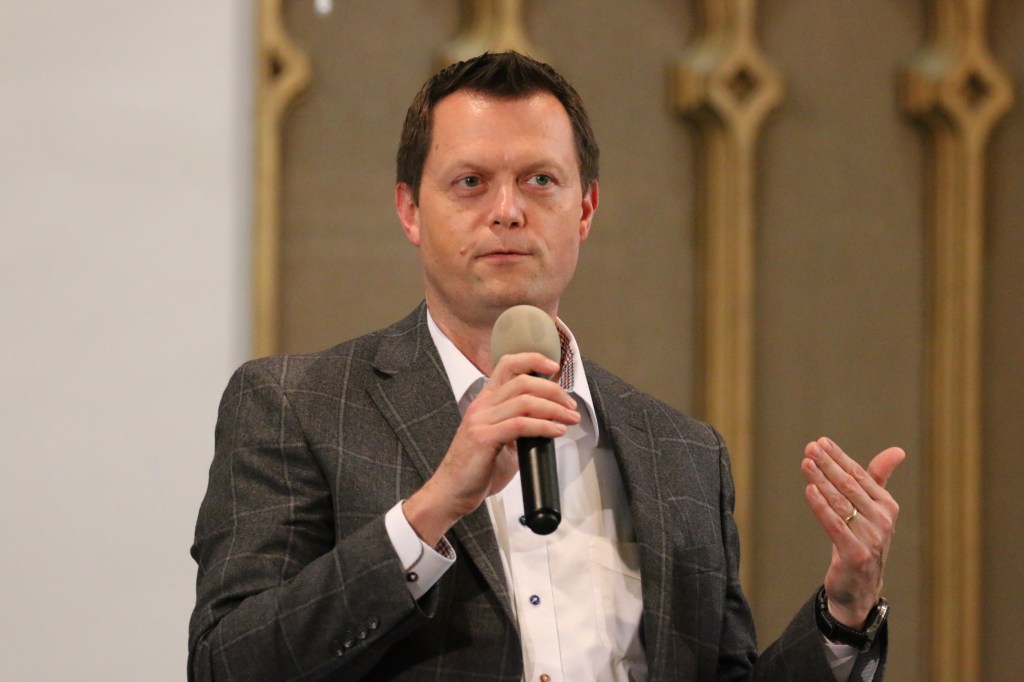
“Where we end up is that we did not add additional provocative language. We removed language that puts restrictions on people recognizing that in The United Methodist Church there are people who are in a lot of different places on this and no one is compelled to do something that is against their conscience and at the same time no one is told that they do not belong or that they are less than,” said clergy delegate the Rev. Andy Call, senior pastor of Church of the Saviour UMC (Northern Waters).
Worldwide Regionalization
More than three-quarters of voting delegates at General Conference approved legislation that would restructure The United Methodist Church to be more contextual in the different regions served by the Church. Regionalization represents an effort to put the church’s different geographical regions on equal footing and to make the General Conference less U.S.-centric. The current central conferences and the U.S. would become regional conferences, with the same authority to pass legislation for greater missional impact.
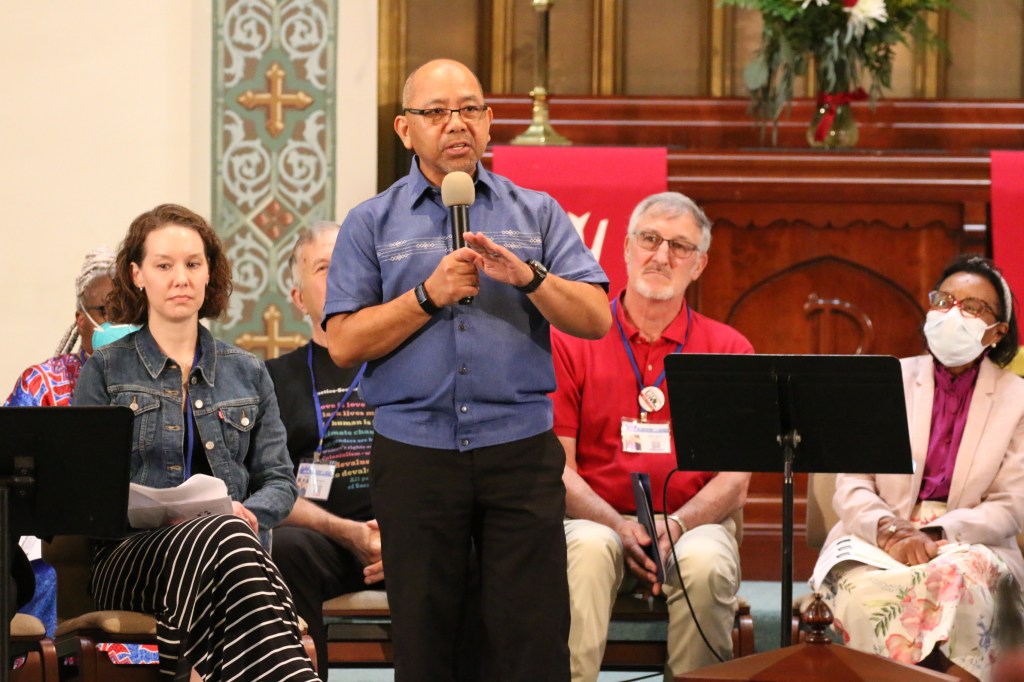
“Regionalization is perfect because The United Methodist Church is present all over the world,” clergy delegate the Rev. Armando Arellano of Euclid East Shore UMC said in his presentation May 18. “Regionalization will help us focus on mission because there are needs in the Asian context and in the African context and the Philippine’s context that are different than the needs of the American context. So, regionalization is taking advantage of the context of the people and the culture in making disciples of Jesus Christ to push and to focus on mission. It’s all about mission, it’s all about sharing the Gospel of Jesus Christ to all people.”
The regionalization legislation involves an amendment to the church’s constitution. This would have to be approved by at least two-thirds of the total votes cast across all annual conferences worldwide in order for much of the regionalization legislation to take effect.
Bishop Tracy S. Malone shared, “We will not be voting on these constitutional amendments at this Annual Conference because we will be spending this next year with members, clergy and lay, learning more about regionalization so that in 2025 at the Annual Conference that is when we will vote on regionalization.”
Sacramental Authority of Deacons
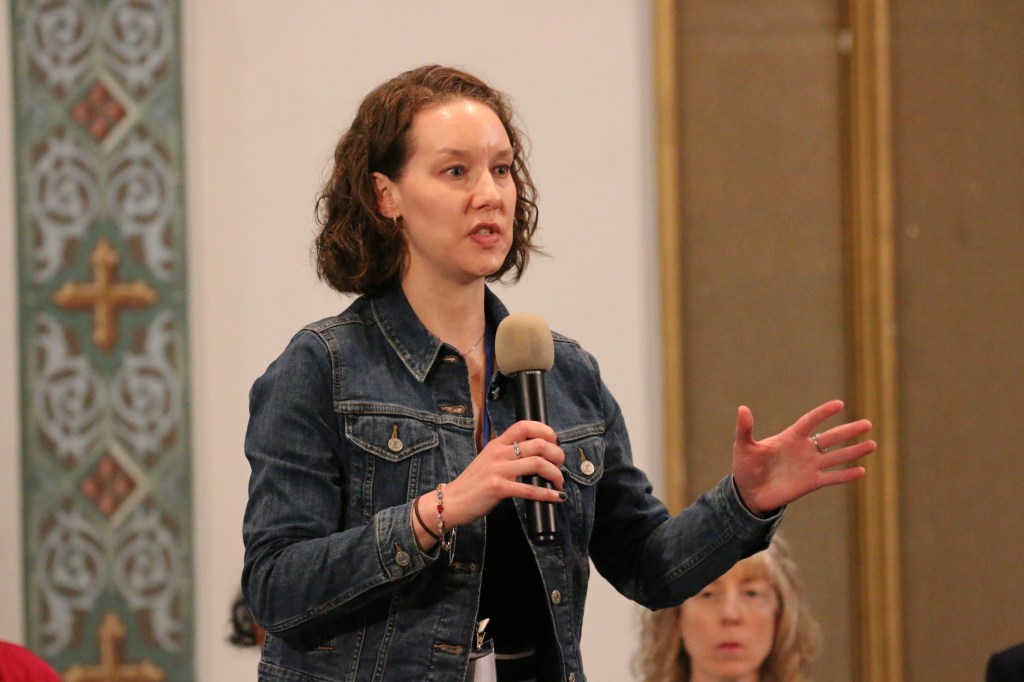
“We passed legislation granting Deacons sacramental authority in their ministry settings. That was approved by a 65% majority vote and this legislation authorizes Deacons to preside over the sacraments, holy communion and baptism, in their appointments without needing explicit permission from their respective bishops,” lay delegate Susan Achberger stated in her Post-General Conference Information Session presentation.
Delegates’ Perspective of This General Conference
Following the brief presentations of the four key outcomes of this General Conference, Malone invited the delegates who were able to be at Wooster UMC to share their takeaways from the just-completed conference.
- “Wow, what a pilgrimage! One of the things that grabbed me was the worship. Powerful worship. Listen afresh. Isn’t this what God wants us to do. Isn’t this what the Holy Spirit is inviting us to do? To listen to God with fresh ears and fresh insights,” said clergy delegate the Rev. Benita Rollins.
- “This General Conference was a great experience. The previous ones you already knew there was a line in the sand, and you usually got one day and then the fighting began. This year we had a great first day and then I was waiting for the wheels to fall off but this time they didn’t. It was ok to disagree. You bring 800 people, and they aren’t all going to agree but it was ok to disagree. There wasn’t the fighting. There wasn’t the bickering. It was a good feeling and good work got done,” said lay delegate Allen Laferty. “The spirit is alive in The United Methodist Church.”
- Clergy delegate the Rev. Jonathan Priebe, senior pastor of Cuyahoga Falls First UMC, spoke of his joy seeing delegates able to speak in their own language and then be translated for others to hear in their language through the headsets they wore. “I was appreciative of the way folks waited for each other, that there was this pause where the body of the Church would slow down to make sure that everyone understood what was being asked of them and what they were voting on and that those decisions could be made together.”
- “I was very saddened about the changes that were made to The Book of Discipline,” said lay delegate Holly Grant.
- Rev. Cara Stultz Costello, superintendent of the Central Valley District and first-time delegate to General Conferences shared that as a self-proclaimed “Methodist nerd” her favorite paragraph in The Book of Discipline of The United Methodist Church is ¶105, which defines our theological task. She offered that information as background in explaining why, as a first-time delegate her favorite part of General Conference was the holy conferencing. “It talks about how we discern that the Holy Spirit is moving, and we did that. Paragraph 105 was active, in full force, at General Conference,” she declared.
- Lay delegate Bill Watts, serving on his first delegation after attending the four previous General Conferences as a volunteer, said, “To me the biggest thing is we’ve made changes, now we need to grow into those changes as The United Methodist Church.”
- Fellow lay and first-time delegate Susan Achberger spoke of the challenge of “doing mental calculus” to be sure that she had saved enough personal time off through work to be able to both take her dream vacation and still be able to fulfill the commitment she made to serve on the delegation. “I was really glad when I went and I was hit with this positive energy and this feeling of hope,” she said. “There were a lot of young delegates there and I think if they can have that hope and that energy that we can carry that through and we can help lead the Church into the future. I feel like we are in a very good place.
“The United Methodist Church is a worldwide, diverse church. Of the almost 800 delegates at General Conference there was cultural diversity, socio-economic diversity, and theological diversity,” Malone said. “The holy conferencing, the faithful work that those delegates did together. We celebrate the work of this delegation, but we also celebrate the work of the whole Church.”
Question & Answer Session
Offered here are answers to some of the questions that were asked during the Q&A about General Conference legislation.
What is the stance of The United Methodist Church regarding Israel?
“The United Methodist Church has decided that we really are not in the position of taking sides as much as we are in the position of supporting the human rights of all people. So, our legislation this time really took a look at ways that we can affirm the rights, the human rights, of the Israelis and the Palestinians rather than taking sides with one group or another because that is beyond our reach,” said Banks.
What guidance is being offered to churches about policies for churches now that restrictive language around matters of human sexuality will be removed from The Book of Discipline?
Malone shared that she is forming a team to draft sample guidelines and language that will provide local churches with an “official, credible resource with accurate information.” Those resources will help but the bishop said the key will be for pastors and their congregations to have healthy conversations about how best to be in ministry with one another and with the community.
“I really encourage for there to be conversation because what we don’t want is for this to cause harm within your own local church by one group or a few people making a decision for the whole. So, I strongly encourage for the pastor to take a lead role in having that conversation because it’s a ministry matter, as well, but it’s also the building so we know that trustees but also the church council has responsibility as it relates to the use of property, but it needs to be a collaborative, prayerful, discerning conversation,” Malone said.
Is there a pathway for churches wishing to disaffiliate?
“The General Conference did remove ¶2553 from The Book of Discipline. Paragraph 2553 sunsetted December 2023 and now that paragraph does not exist in The Book of Discipline. There was no pathway that was put within The Book of Discipline that would allow for a local church, as a local church, to separate from The United Methodist Church,” Malone said.
What should we say to people who left the church before General Conference now that we know the decisions delegates made?
“The table has been set where everyone is fully welcome, that no one is abandoned, where there is room for all, and The United Methodist Church has expanded that table. With the removal of the restrictive language, for the first time in years, nobody is excluded, that means that everyone is welcome into the total and full life of the Church and there is room for all,” Malone said. “There is room for everyone, who chooses, who can see themselves to be in a church where everyone has a seat at the table. We don’t have to fight anymore, we can choose to stop fighting, we can choose to be together, to be unified in Christ, to expand the table, to extend an invitation to the table, to be beloved community. There is room for all. Come home.”
*Rick Wolcott is executive director of Communications for the East Ohio Conference of The United Methodist Church.
 East Ohio News