By Brett Hetherington*
A large crowd of East Ohio Conference laity and clergy was on hand Saturday November 18 to hear guest theologian the Rev. Dr. Sidney S. Williams, Jr. share about what it means to have a Just Economy. That was the theme of Black Theologian Day 2023, an annual East Ohio Conference Connectional Ministries office Perspectives learning event, that was hosted at Cory United Methodist Church (North Coast District) in Glenville on the east side of Cleveland. Rev. Dr. Martin Luther King, Jr. spoke at the church in May of 1963 and on April 3, 1964, Malcolm X delivered his famous speech “The Ballot or the Bullet” there.
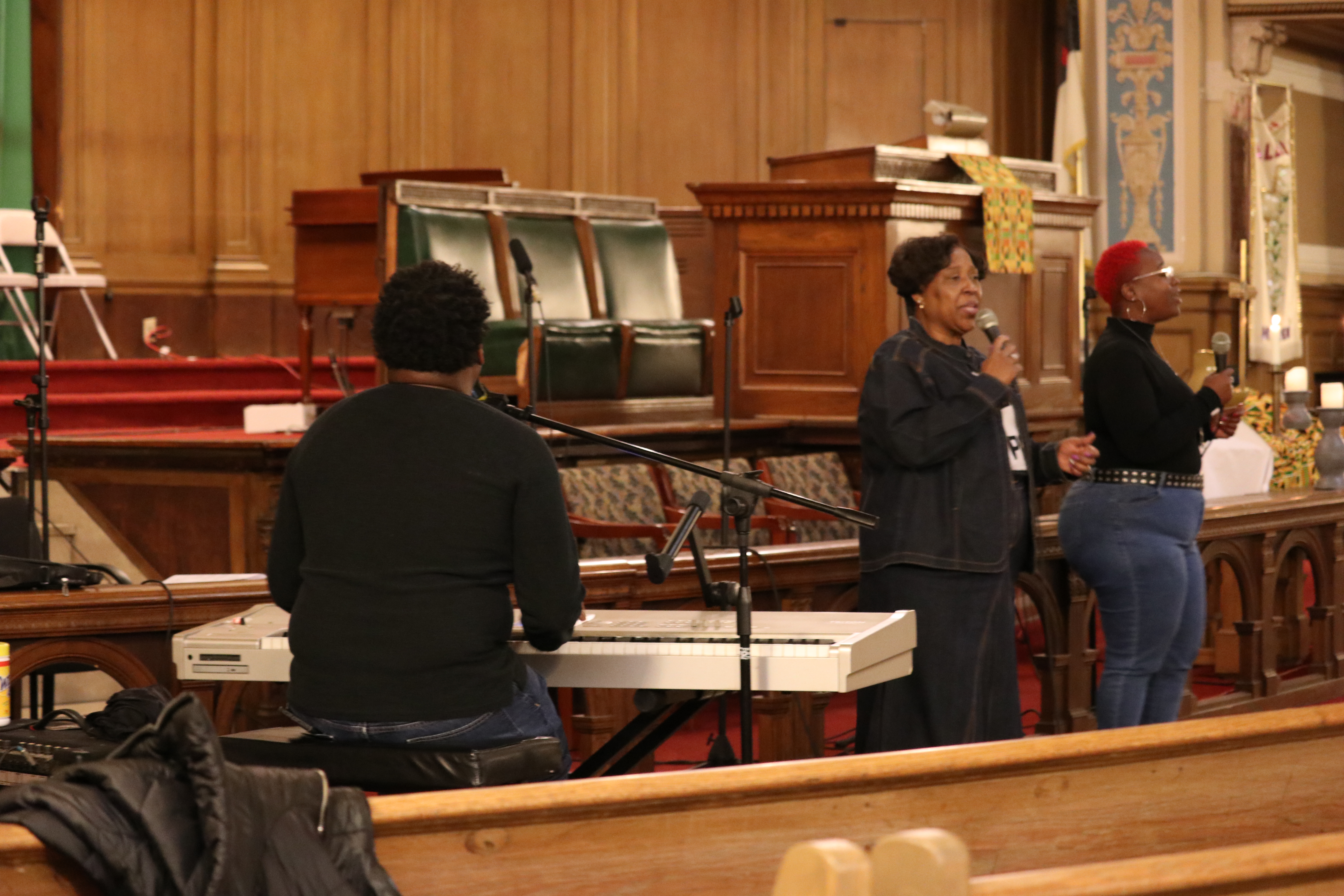
After a spirited and moving time in worship through music together, Bishop Tracy S. Malone opened the day with a brief introduction and a moving call to be “witnesses, advocates, agents, conduits, vessels of the Lord’s favor. To work toward God’s vision of a just economic world order. That is the work of the church. That is the work of every disciple of Jesus Christ.”

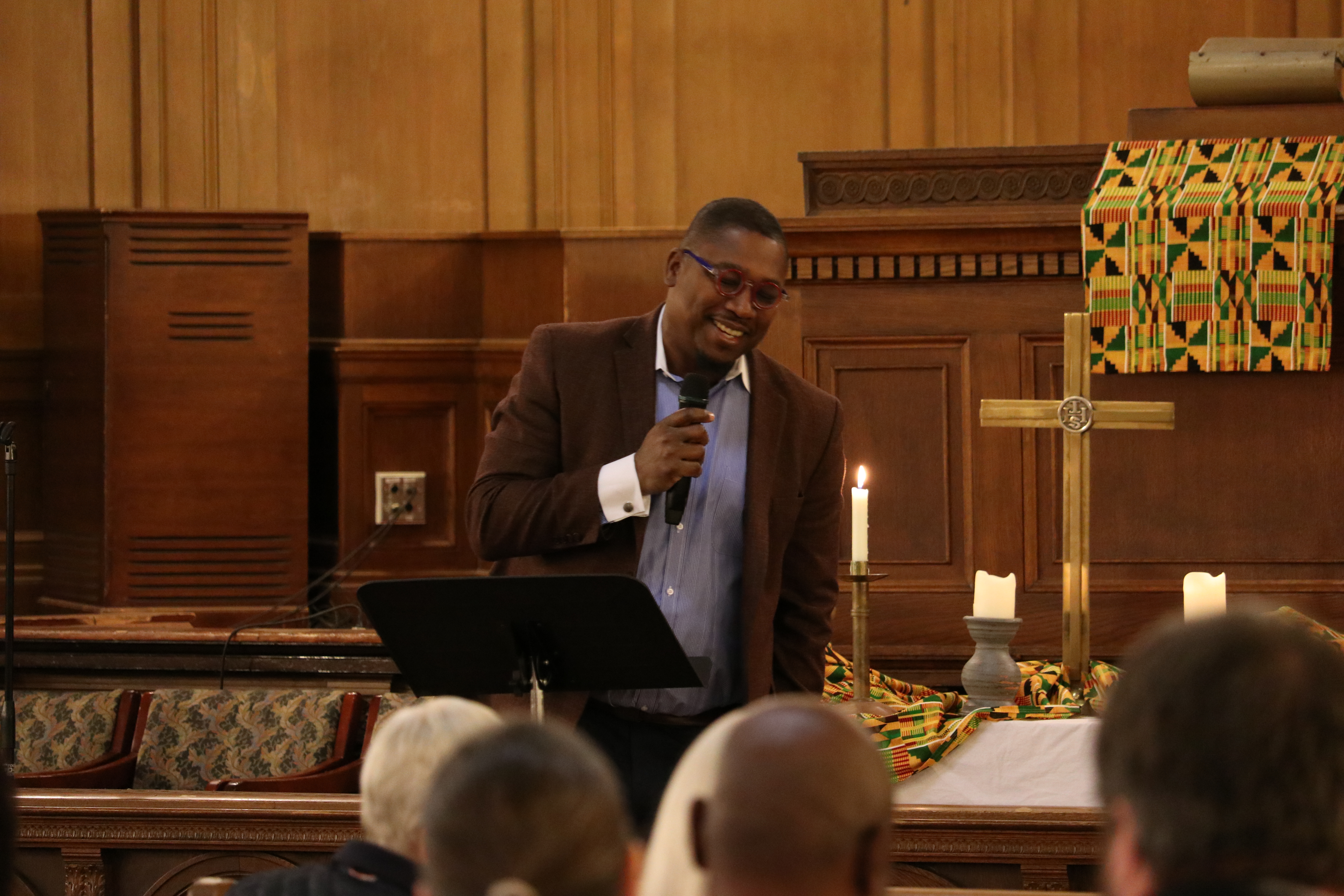
“If you really want to address issues of racial wealth gap, racial equity, you cannot ignore Black churches,” stated Williams. “You just can’t. Because many of the census tracts in low-income communities the only asset that we still have is the church. In many of the neighborhoods where there is low income and poverty most people are renting.”
This was one of the main points that Williams led with for the day, highlighting wealth and income disparity, and how the church is called to take up the cause of making the world a more just and equitable place.
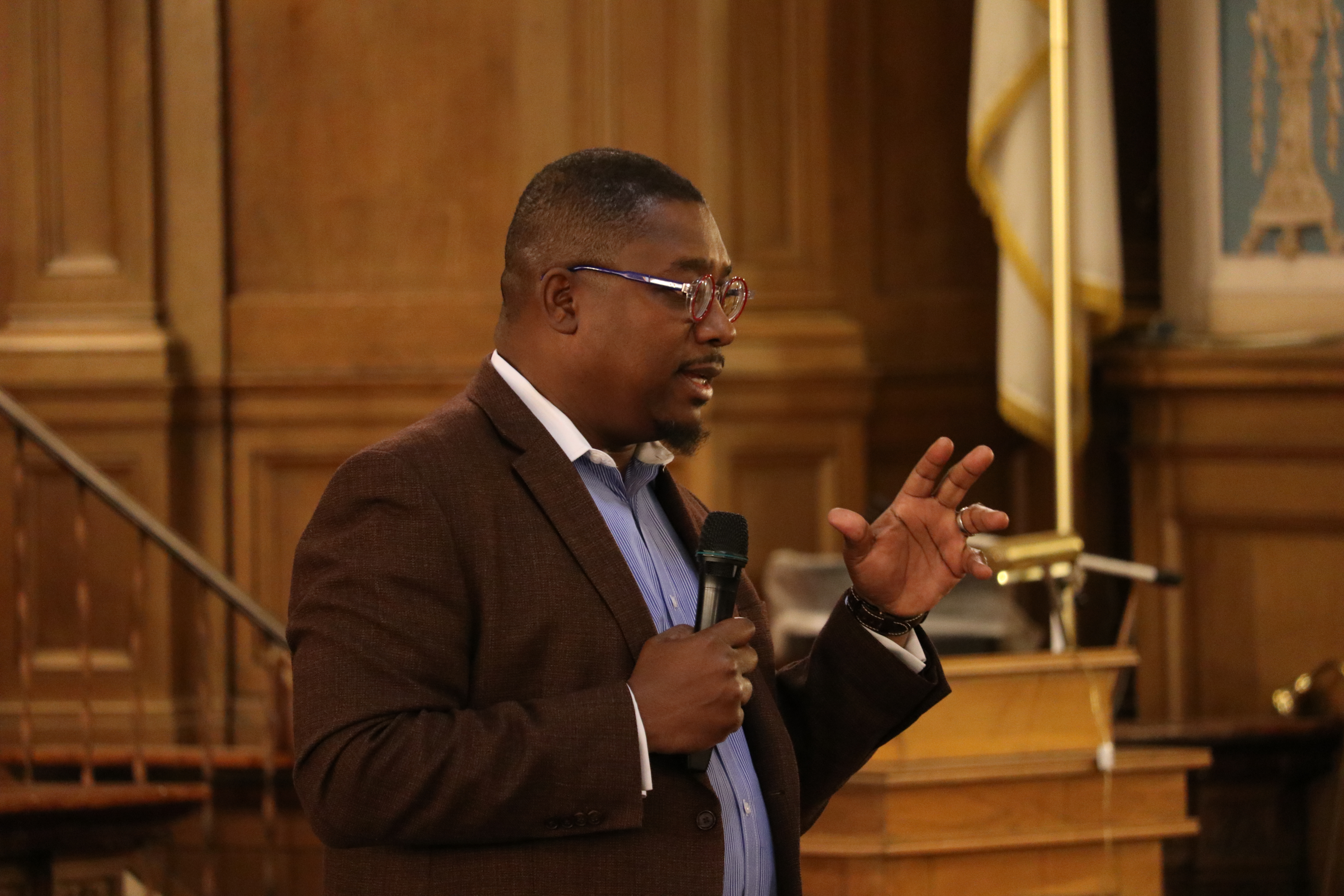
There were two plenary sessions in which Williams shared of his experiences both in the world of finance and as a pastor. Williams, an entrepreneur with an MBA in Finance, serves as the CEO of the Crossing Capital Group, an organization which seeks to address the structural inequities in underfinanced communities in practical ways. He is also in his 13th year as pastor of Bethel Church of Morristown in New Jersey. In addition, Williams teaches Masters- and Doctoral-level courses on social impact, church governance and administration at Drew Theological School, a United Methodist seminary.
Referencing the site of Black Theologian Day 2023, Williams remarked, “This building is nice. But it is not energy efficient. I would wager over the years it has cost more to keep it open than they did doing ministry.” He made the comment to point out that churches often tend to focus on buildings rather than caring for the communities they reside within, and that churches should look toward shifting their buildings onto more multi-purpose usage.

“This conversation is so important for us to think about how the Conference can leverage its resources to multiply economic impact in our communities. The opportunity for creative reuse of our buildings for ministry is an exciting prospect that turns our attention from inward concerns, to outward vision about how we can be a catalyst for the thriving of the neighborhoods our churches exist in,” said Will Fenton-Jones, Connectional Ministries office Multicultural Ministries director who moderated the afternoon panel discussion.
“Being here in a small part has confirmed something that we have been moving toward in our own church. We have been trying to find ways to provide housing in our community. It is a slow process, but this confirms that we are moving in the right direction,” shared Rev. Gerald Cameron, pastor of Celebration UMC in Euclid.
“I appreciated his honesty and openness when he reflected when he first came into his church and he didn’t listen to their stories of how they got to where they were,” shared Rev. Angela Lewis, superintendent of the Canal District and co-superintendent of the Mahoning Valley District. “Their history, their pain, what they tried, what they didn’t try. And allowing them that space because there was trauma there and you need to work from there. And it wasn’t. I really appreciated that reminder of connecting with the people before we just push forward.”
Williams also spoke on the idea of wealth and where it truly comes from.
“Wealth accumulation on average is achieved generationally or communally. What people would have us believe is that we can do it individually. We promote a gospel of individualism and believe that is the right way to think about the economy. If I go to the right school, get the right job, I get the right budget, I make the right investments and if I don’t do it I die trying. We are told we can make this happen in one generation. The probability of you dying wealthy in one generation is pretty slim.”
Tying into the discussion of wealth, Nick Bates, director of the Hunger Network in Ohio posed a pointed question during the closing panel discussion. “What is the goal of our economic system? What are the goals of our policies? Are they to protect the wealth and power of the few? Or can we utilize these systems to ensure that everyone has their food, everyone receives their daily bread and basic necessities, and how do we functionally do that in society?”
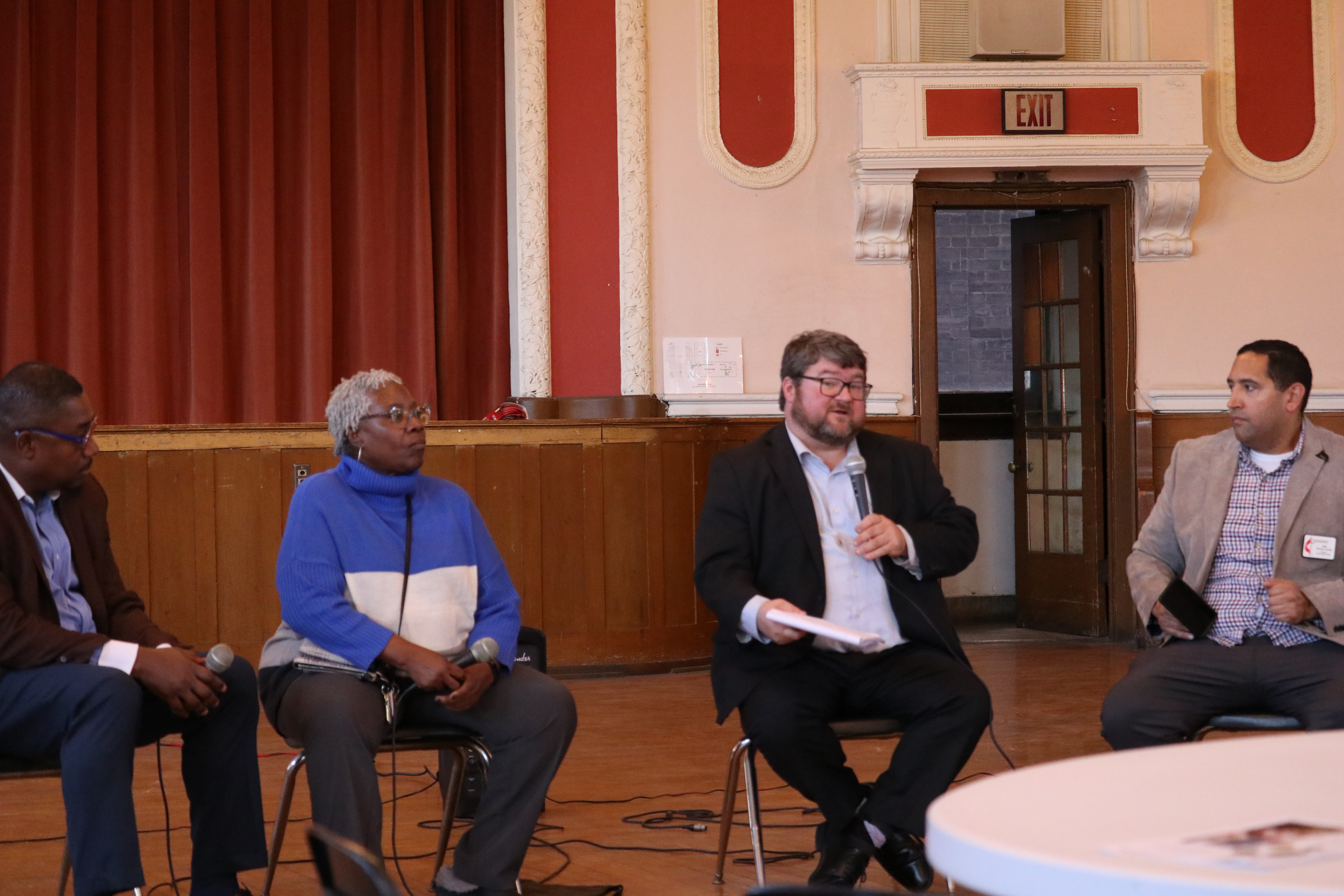
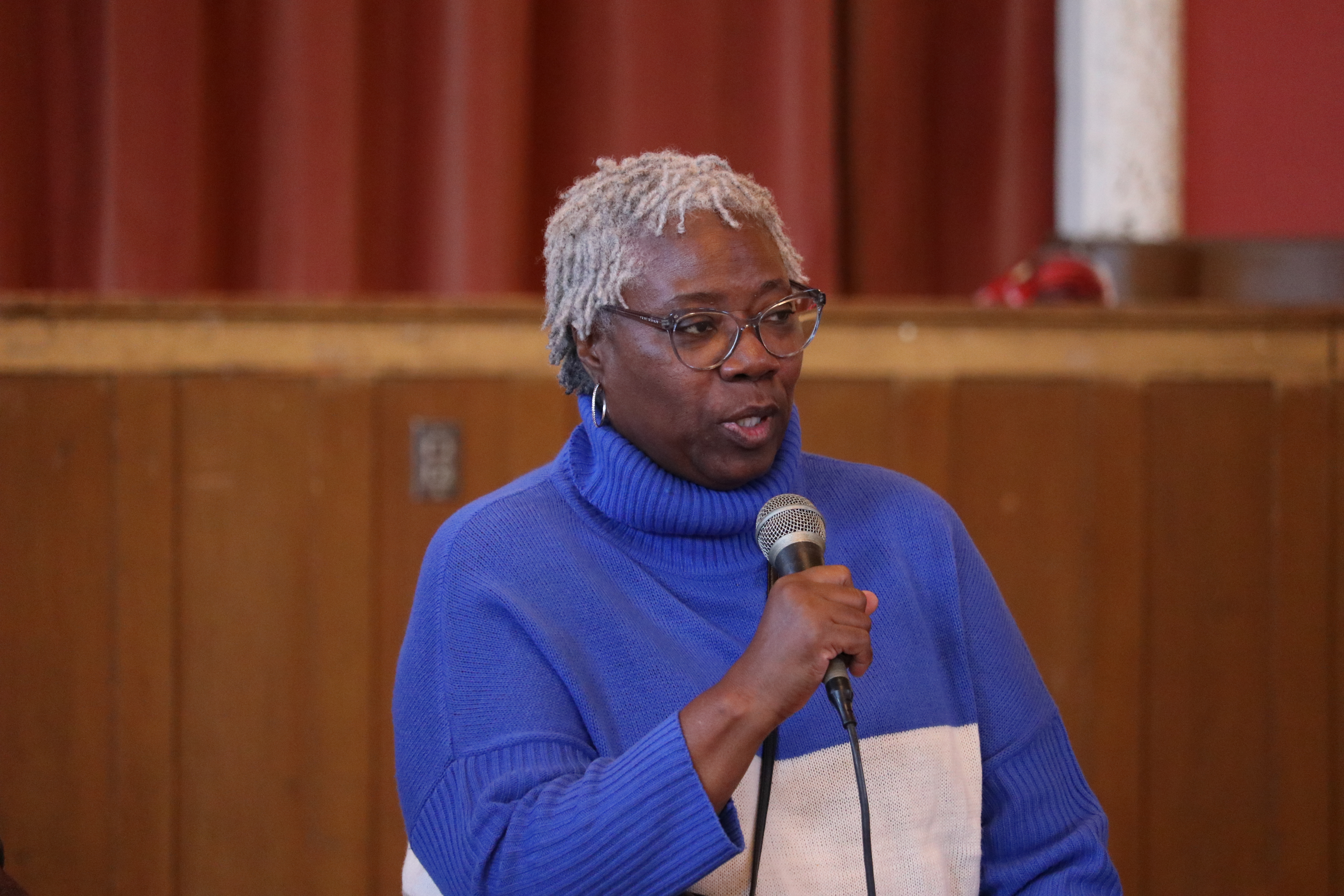
The third member of the discussion panel was the Rev. Dr. Amariah McIntosh, director of Public Policy with the Ohio Council of Churches, an ecumenical organization encompassing 4,000 congregations across the State.
“We talk biblically and theologically about confession and repentance as the start of transformation. Until the church will do these, we’re still going to have all these underlying issues. Especially when we have legislators who claim to be acting and making policy based on what it is they believe. That’s got to be challenged. Especially when it impacts those of darker skins and darker hues and lesser economic circumstances,” she said.
When asked what predominantly white churches – especially churches that are in predominantly white communities – can do to aid Black churches in creating a just economy, the answer Williams stated was simple, and to the point.
“Whatever is done needs to be Black led, and white supported.”
Executive Director of Connectional Ministries Rev. Ed Fashbaugh shared his insights on what Black Theologian Day 2023 offered the clergy and laity of the East Ohio Conference.
“Rev. Dr. Sidney S. Williams, Jr. gave us a theological framework from which we were challenged and inspired to keep thinking outside the box to make a difference in our communities. Dr. Williams’ insights are valuable and applicable for all churches. Black Theologian Day provides East Ohio the opportunity for a diverse practical theological experience that is as enriching as it is informative.”
The Conference Communications team would like to share other stories that highlight ways that each of us is answering the call of Bishop Tracy S. Malone to reach out to our communities in creative ways. Please e-mail your ministry story to EOC Executive Director of Communications Rick Wolcott at wolcott@eocumc.com.
* Brett Hetherington is the Communications specialist for the East Ohio Conference of The United Methodist Church.
 East Ohio News