By Rick Wolcott*
All clergy were invited to participate in the Bishops’ Retreat with Black Clergy, a joint learning event hosted by Bishop Tracy S. Malone of the East Ohio Conference of The United Methodist Church and Bishop Gregory V. Palmer of the West Ohio Conference of The United Methodist Church. The annual retreat began in 1982 when then-East Ohio Conference Bishop James S. Thomas created the event to nurture and develop clergy whose diversity and perspective is invaluable to the Conference.
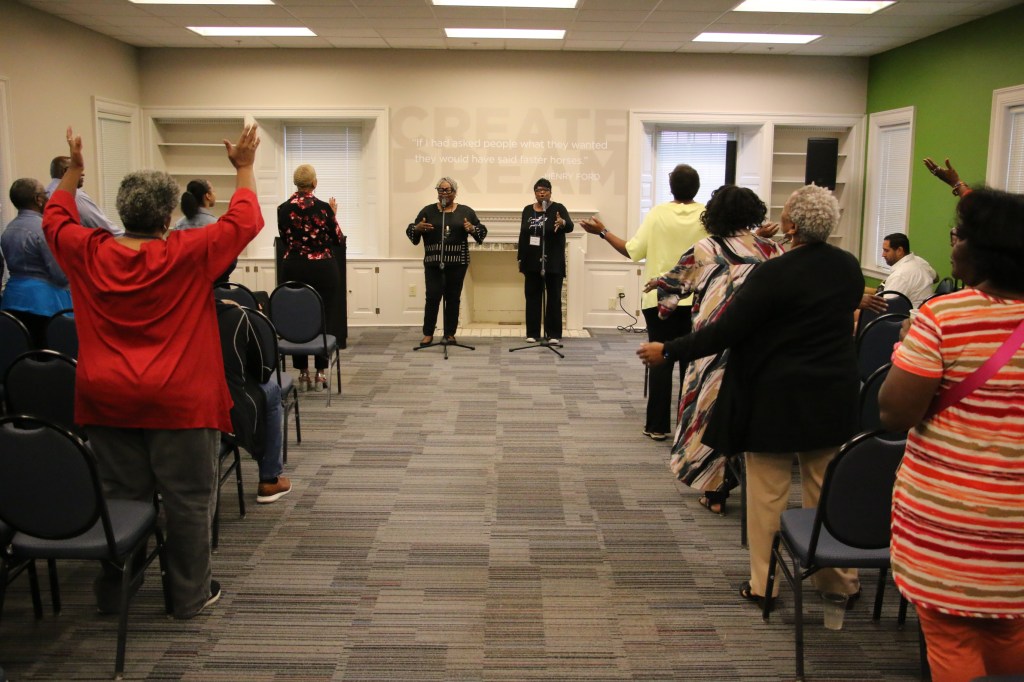
Dozens of clergy persons participated in the Bishops’ Retreat with Black Clergy October 4-6 at the Nationwide Hotel and Conference Center in Lewis Center near Columbus. The guest facilitator was the Rev. Dr. Valerie Bridgeman, Ph.D., who appeared with a team from WomanPreach! Inc. Rev. Dr. Bridgeman is the dean and vice president for Academic Affairs at Methodist Theological School in Ohio and the founder, president, and CEO of WomanPreach! Inc.
“Preach! Preacher, Preach! is about finding your own voice and thinking through what you’re preaching, why you’re preaching it, and how you’re preaching it,” Bridgeman said to the clergy participants. “I believe that God is speaking, has spoken, spoke through Jesus, and is still speaking.”
“The focus for this year’s retreat is on the preaching and the further equipping of our clergy to be even greater proclaimers of the Word of God, for they themselves to be renewed, in their spirit, to learn some new tools and techniques for how to improve their preaching for the purpose of transformation, the transformation that will happen in people’s lives but also the kind of transformation that will lead to community transformation through the preached Word,” said Bishop Malone.
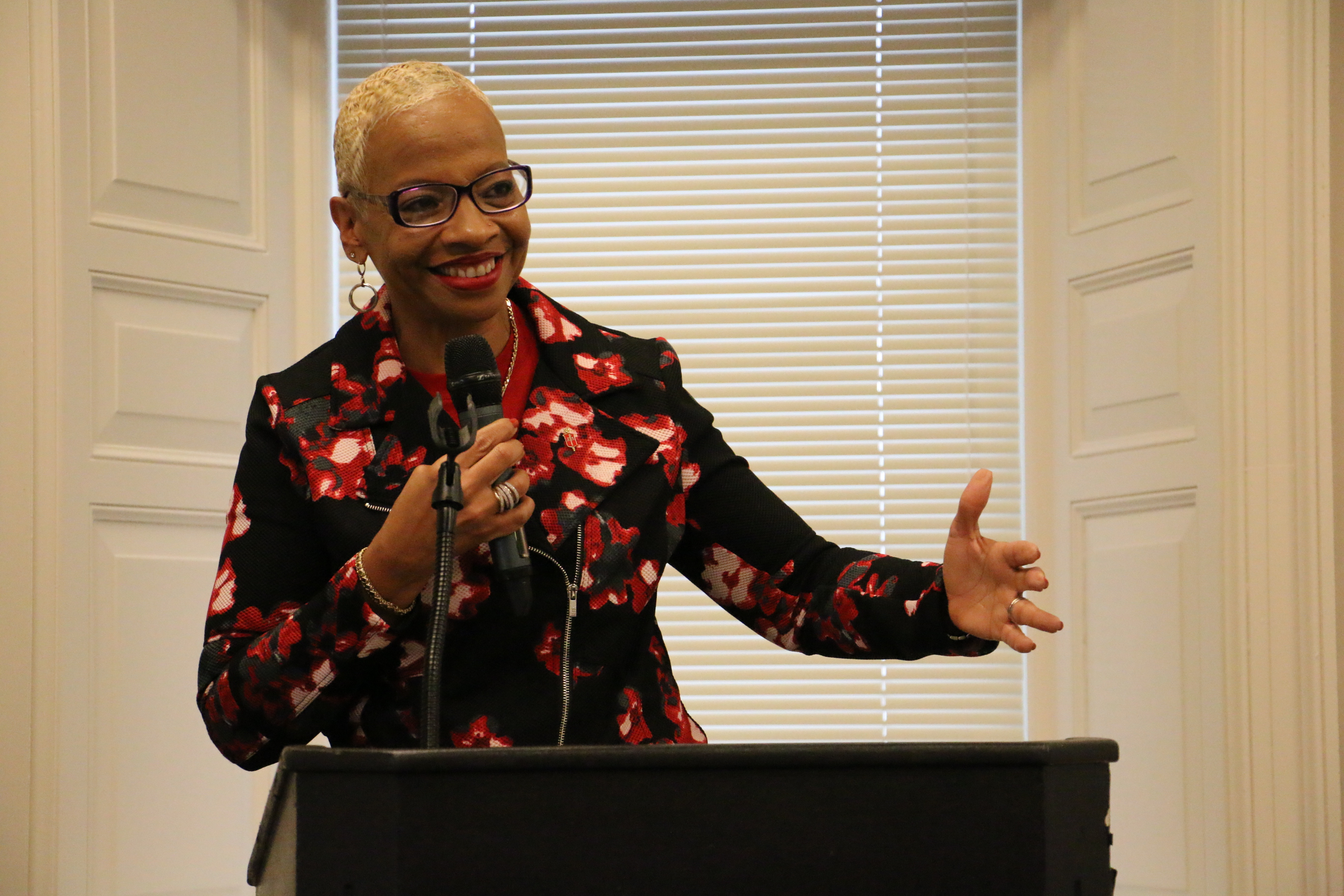
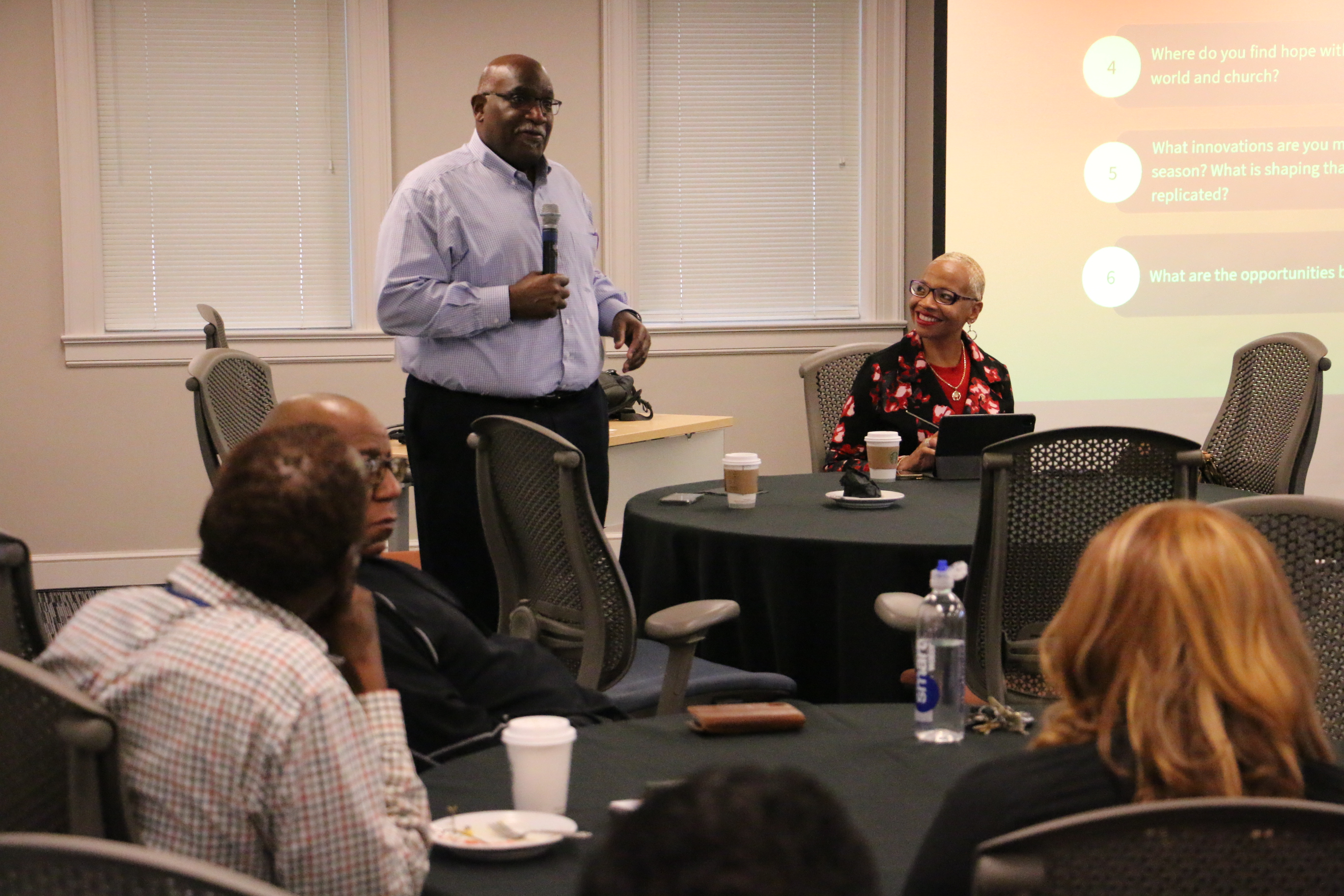
“Yes, and to find or reclaim their voice for the proclamation that is needed now,” added Bishop Palmer.
In her devotion message the first morning of the retreat, Malone read the words of Galatians 5:3 and “Strength to Be Free,” a mediation from Howard Thurman’s Meditations of the Heart, a book she inherited from her late father, the Rev. Willie Smith.
“As we pray and accept the freedom that we have in Christ Jesus, hear the Word again: ‘you, my brothers and sisters, were called to be free but do not use your freedom to indulge in the flesh’. Do not use your freedom to indulge in self-pity. Do not use your freedom to indulge in pride. Do not use your freedom to indulge in not acknowledging, ‘I need help, I can’t handle this’. Do not use your freedom to submerge yourself or to isolate yourself, but use your freedom to trust, to believe, to keep your hope alive in Christ, and to serve one another in love,” Malone exhorted. “If we are going to preach the Gospel, the full Gospel, the whole Gospel, the social Gospel, if we’re going to have the courage to use our voices, to use our agency, to use our leadership, to use our whole selves, then we have to be free from that which binds us but not being overwhelmed by that which binds us. But let us not get it twisted that this freedom that we have does not mean that problems don’t arise. The freedom that we have means we have the power to overcome. And that power comes through our faith in Jesus Christ.”
Table Conversations
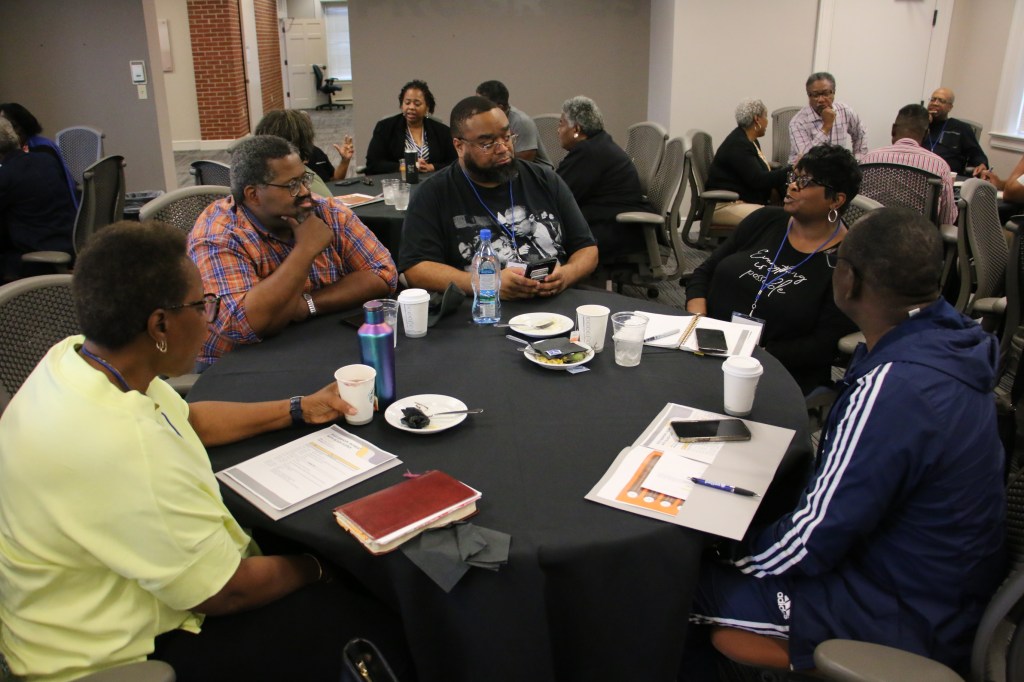
The afternoon of the first day and the morning of the second day of the retreat, clergy sat in small groups around tables and discussed these questions:
- How do you overall assess the current state of the Church (in particular regarding matters of Race)?
- How is the current state of our denomination affecting you, if at all?
- Where is your voice in all of this, and where do you want it to be?
- Where do you find hope with all that is happening in the world and Church?
- What innovations are you making in ministry during this season? What is shaping that innovation? Can it be replicated?
- What are the opportunities behind the disaffiliations?
“The bishops created the questions, and the conversations are about finding a voice in this next season of ministry, looking at what’s new that we can do but also going back to basics of preaching from scripture,” said Will Fenton-Jones, East Ohio Conference Connectional Ministries office Multicultural Ministries director.
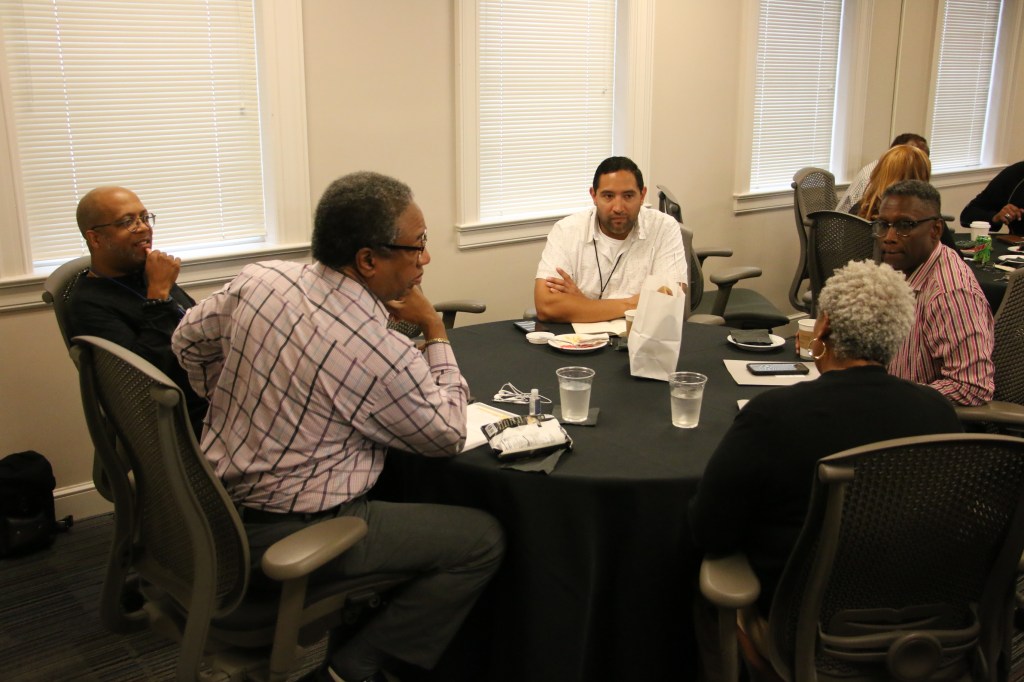
He and Rev. Donnetta Peaks, West Ohio Conference office of Ministry director, worked with the bishops in designing the Bishops’ Retreat with Black Clergy.
“Preaching is really contextual, so this retreat gives clergy a chance to step away from their regular routine and all that is involved in their work and really focus on scripture and finding their voice new and afresh for this next season in the Church,” Peaks said.
At the conclusion of discussing each one of the questions, a person or persons from each table summarized what was shared around their table so that all participants could benefit from the wisdom and observations expressed by their colleagues.
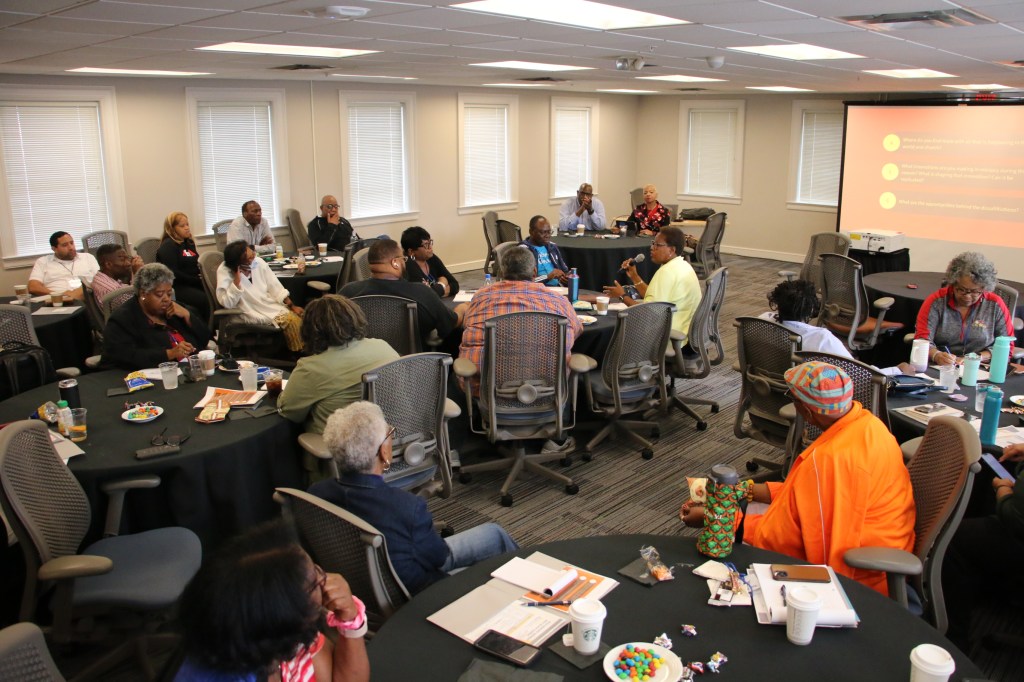
To assist in looking forward, clergy spent some time looking back by discussing the impact that disaffiliation has had on pastors, congregations, and faith communities. In leading part of that conversation, Bishop Palmer asked clergy, “what opportunities has disaffiliation created? If it’s one character in Chinese and Mandarin for crisis and opportunity, what’s the opportunity?”
“Disaffiliation was an opportunity because we were forced to think about things differently,” shared Rev. Leo Cunningham of St. Paul’s UMC in Toledo. “It’s an opportunity for rediscovering the roots of Methodism, an opportunity to come to grips with what people believe, especially about Jesus because some people had never been confronted with that.”
Said Pastor Tennille Power of Elyria First UMC, “as we approached this question, we saw it as an opportunity for honest transparent conversations and conclusions. We’re setting free those who need to be free and setting those who remain united to move from trauma to rebirth and healing and acknowledging our resilience in this moment. It’s an open opportunity for heart-to-heart theological conversations about certain Biblical context. It’s an opportunity to build deeper trust with one another who remain united and an opportunity to expand our faith in God. We also see it as an opportunity to remember and embrace our larger historical context as United Methodists, for example, remembering our role in the abolitionist movement where our trauma, and resilience, and healing came from that.”
The conversations then moved to discussing the hope that clergy are seeing in the Church and the world and celebrating the innovations and replicable ministries that are happening in United Methodist churches across the State of Ohio such as “our younger generation that sees beyond today, especially in terms of orientation, race, and classes” and ministries to and with the community like food pantries, clothing free stores, and much more.
“I’m sitting here thinking of the comment made the other night by Rep. James Clyburn (Democrat, South Carolina) when he said during an interview, ‘we need people who don’t want to make headlines but make headway.’ That just sent chills down me. But when I think about our beloved United Methodist Church, yeah, we’re in the headlines folks but guess what? We’re getting ready to make headway!” declared Rev. Benita Rollins, a retired Elder in the East Ohio Conference.
Preach! Preacher, Preach!
Rev. Dr. Bridgeman began her opening presentation by asking clergy how many use the Common Lectionary when planning their sermons.

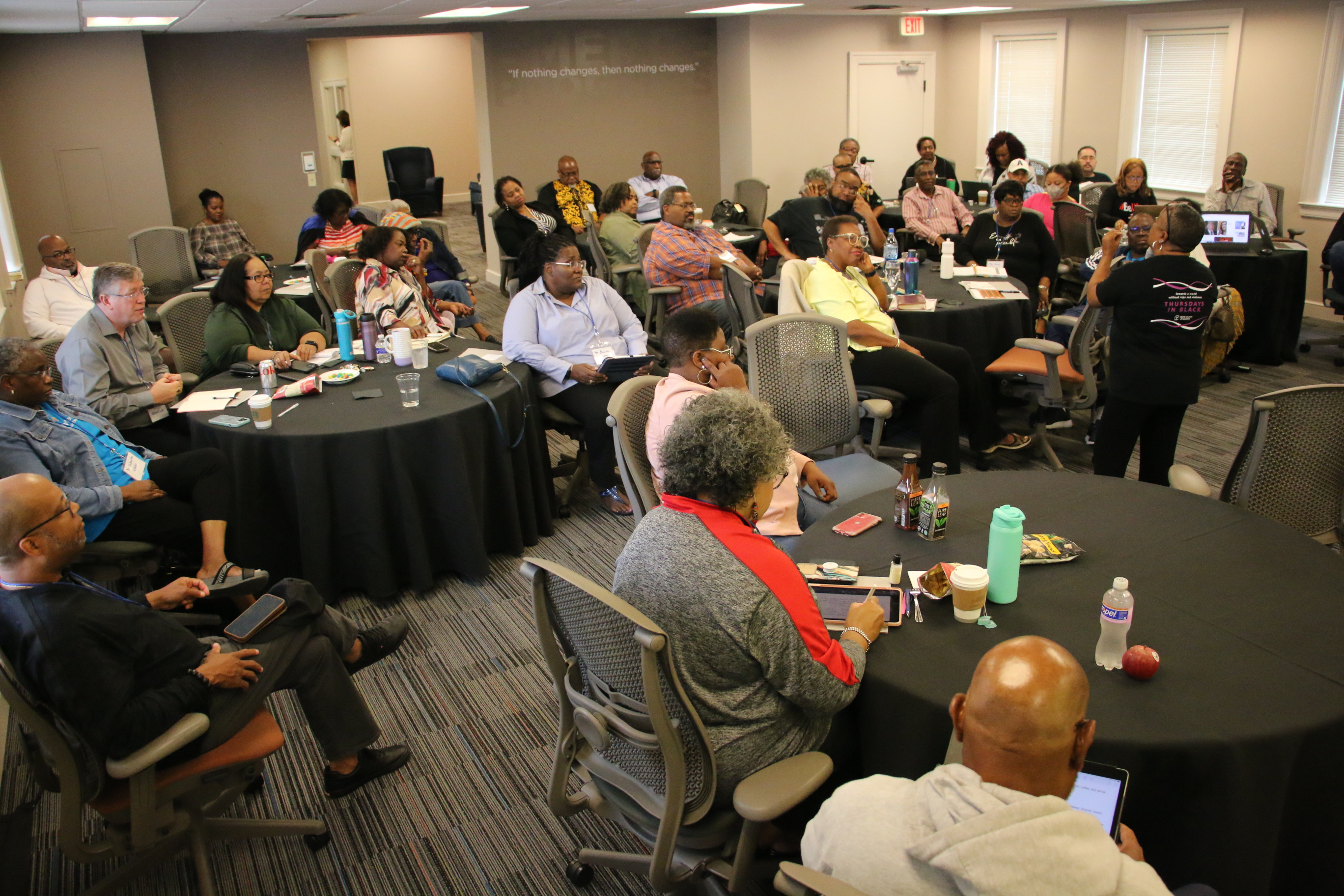
“The Lectionary is based on the cycle of life, the liturgical life of the Church. It starts with Advent, and it ends with Christ the King Sunday,” she said. “The first Lectionary was done in the 7th Century after Jesus’ birth. That’s how long people have been preaching the Lectionary. The Common Lectionary was redone in the ‘70s. So now we’re 50 years of doing the same Lectionary with Roman Catholics, with the Orthodox Church, with almost all the Protestants who use this, The Church of England, (and) the Church of Canada. So, think about the fact that all over the world these texts are being sung, read, and preached. So, for me the theology around the Lectionary is, with the whole Church, I am wrestling for a blessing from these texts.”
While some clergy present shared that they like the structure provided by the Lectionary, because it encourages them to preach from scripture verses that they wouldn’t have chosen on their own, its needing to incorporate those passages into their sermons that is the reason other clergy stated that they don’t like to use the Lectionary for planning their messages.
Bridgeman shared that she understands both sentiments as well as the challenge of pastors needing to share a message with their congregations that speaks to the realities impacting their communities today.
“Sometimes you read the Lectionary text for the week, and you ask, ‘where is the good news here?’ and then you the preacher, who hears God on behalf of the folk and hear the folk for God, have to wrestle until there’s a blessing. And I think sometimes what we are resisting is that wrestle,” she said. “You are answerable to the Divine, and the Lectionary allows us to struggle with and find something about God even when we can’t see it. I’ve got years of wrestling so what I’m telling you is sit it in front of you and ask the text before you say it can’t speak to what’s happening in your community. If you’re looking for the obvious connection, you may miss the Divine one. It may be that you say, ‘well, it has nothing to say to me’ because you don’t give it a chance to say something to you.”
“God called you for you, with all of your flaws and all of your joys. Your history is why God called you. So, hiding your history is hiding God,” Bridgeman urged the clergy present. “If God is still incarnating, how is God incarnating through and in you, and in the congregation that you are called to preach to and with? This is what I think preaching is: looking over the shoulder of God and seeing the world as God intends and not as it is and then saying, ‘what if that could happen?’ and figuring out how we can change the world with our words and, therefore, activate action that gets put into practice. I think preaching ought to be helping people figure out who they’re supposed to be and what they’re supposed to do.”
*Rick Wolcott is executive director of Communications for the East Ohio Conference of The United Methodist Church.
 East Ohio News