By Rick Wolcott*
“I am in Birmingham because injustice is here. Just as the prophets of the eighth century B.C. left their villages and carried their ‘thus saith the Lord’ far beyond the boundaries of their home towns, and just as the Apostle Paul left his village of Tarsus and carried the gospel of Jesus Christ to the far corners of the Greco Roman world, so am I compelled to carry the gospel of freedom beyond my own home town. Like Paul, I must constantly respond to the Macedonian call for aid.
“Moreover, I am cognizant of the interrelatedness of all communities and states. I cannot sit idly by in Atlanta and not be concerned about what happens in Birmingham. Injustice anywhere is a threat to justice everywhere. We are caught in an inescapable network of mutuality, tied in a single garment of destiny. Whatever affects one directly, affects all indirectly. Never again can we afford to live with the narrow, provincial ‘outside agitator’ idea. Anyone who lives inside the United States can never be considered an outsider anywhere within its boundaries.”
– ¶¶ 3 & 4, “Letter from a Birmingham Jail” written by Rev. Dr. Martin Luther King, Jr., April 1963
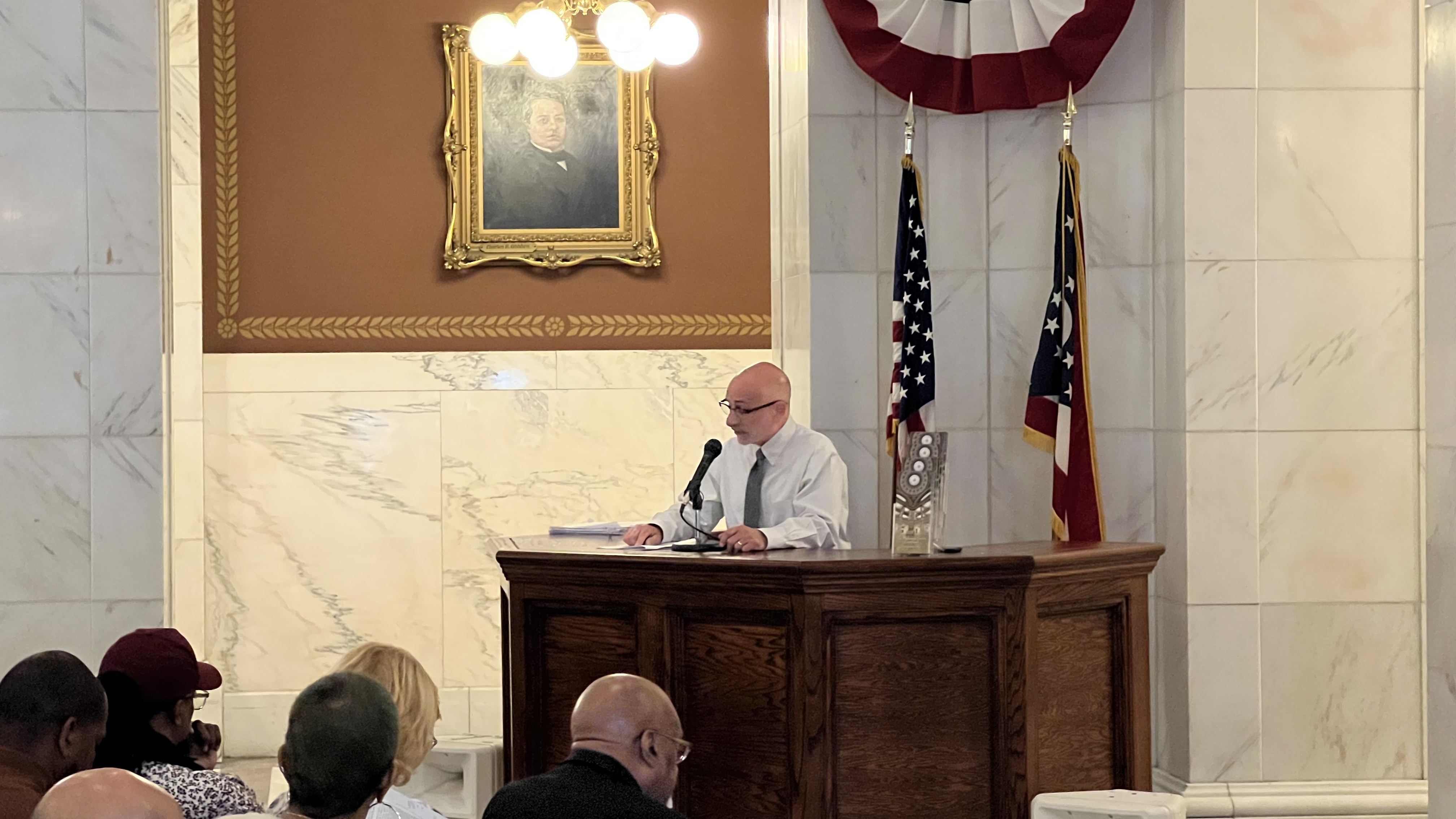
To commemorate the 60th anniversary of its writing, 31 community leaders gathered in the Mahoning County Courthouse rotunda to read aloud the “Letter from a Birmingham Jail” written by the Rev. Dr. Martin Luther King, Jr.

King began writing the letter on April 16, 1963, nearly a week after he had been arrested in Birmingham, Alabama for helping to organize, and participating in, non-violent sit-ins at lunch counters, marches on city hall, and boycotts of downtown merchants to protest the segregated systems of the city. The “Letter from a Birmingham Jail” was written in reaction to a statement published in the Birmingham News by eight Birmingham clergymen condemning the protests.
Penny Wells, executive director of Mahoning Valley Sojourn to the Past, which sponsored the courthouse reading event, said that much of what King wrote in his letter speaks to issues existing in the U.S. today.
“This letter is a well written, historical document that is read in high school classes and in college English and History classes. It is important for us to honor Dr. King’s challenging the status quo of that day and challenging the religious leaders of the community. His words challenge us today to not accept the status quo when we see an injustice. We have a responsibility to use the power that we have to stand up and to speak out when we see an injustice.”

Rev. Shane Russo, pastor of Niles First UMC (Mahoning Valley District), filling in for District Superintendent the Rev. Abby Auman who was ill, read two paragraphs of the letter to those gathered in the rotunda. He said it was important to him to be at the reading.
“Racism is not just an ugly stain of the past but a persistent, if not always easily noticeable, companion in the present. The letter was written to a group of white clergy. As a representative of that demographic, I have a strong desire to help right the wrongs of the past and speak clearly into our present reality to make sure that my fellow white people do not get caught up in the complacency built upon the false ideas that we ‘don’t see color’ and that racism is a bygone problem. Whereas my predecessors desired moderate conformity and unity based on not causing tension, I agree with Dr. King that it is only through tension brought through strategic, non-violent action that the world is made better,” Russo said.
Rev. Ken Gifford, pastor of Poland UMC and Youngstown Trinity UMC (Mahoning Valley District) felt honored to be asked to be one of the readers for this historic event.
“I studied Dr. King’s writings while in seminary and have been deeply inspired by them ever since. Even before my call to ministry I had a strong desire to see justice for all and Dr. King has helped direct that desire. I believe if people would take the time to read his writings with an open mind, many racial barriers would begin to drop,” Gifford shared.
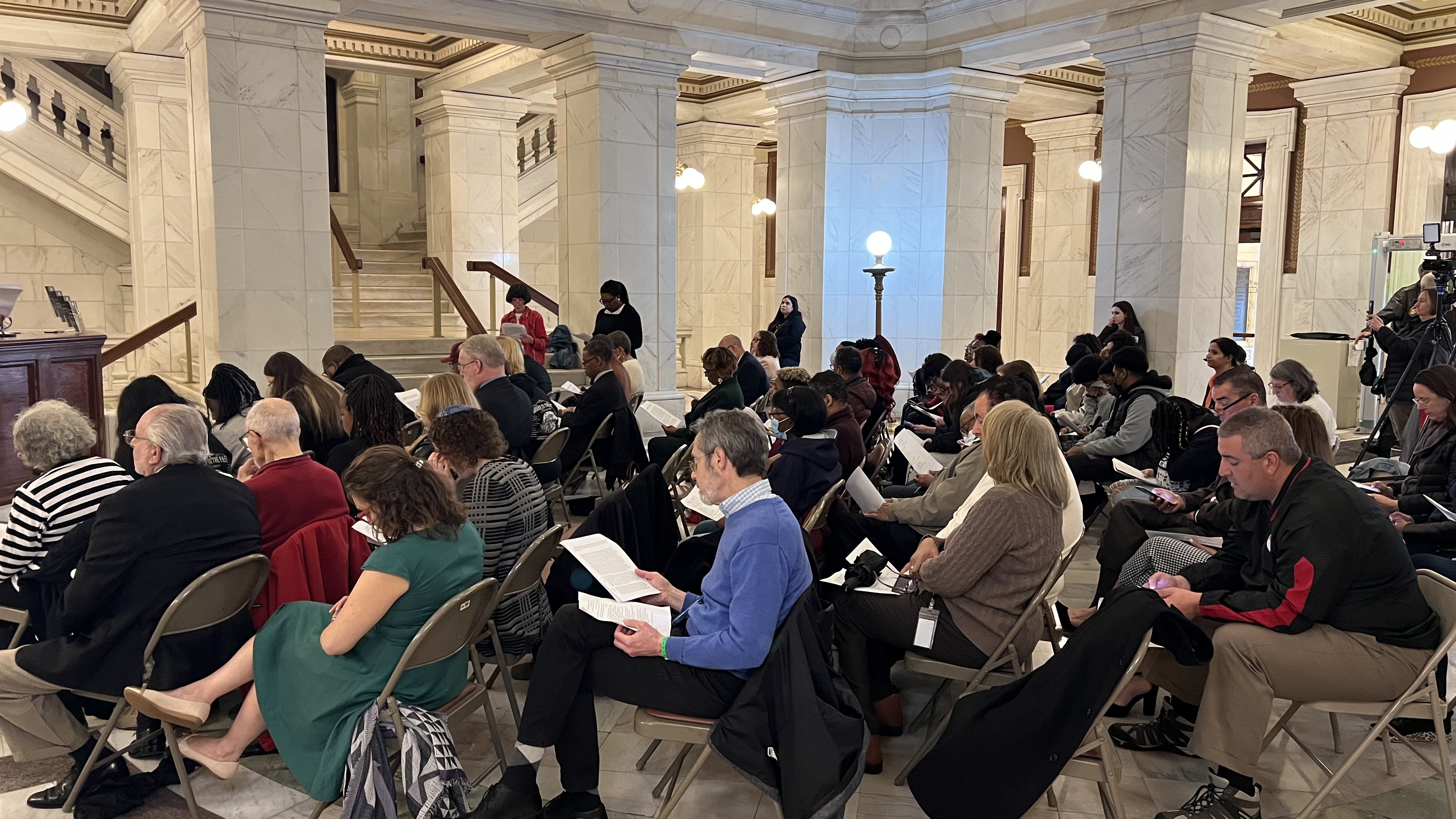
Those on hand to hear the words of Dr. King were asked to listen and to answer these questions:
- “Where might you show your courage?”
- “Where might you sacrifice?”
- “Where might you take a stand?”
Heeding the Words of Dr. King Today
“I was truly honored and humbled to be a part of such an ethnically, theologically, politically, and religiously diverse group of people,” Russo shared. “I felt like a minnow among whales. When I mentioned that fact to one of the other readers, they said, ‘If you’re here, you belong here.’ And that’s part of what this event was all about, right? Finding belonging in a diverse community and being recognized as a valued member of that community.”
Auman was disappointed to have missed the event because she was looking forward to reading the letter with her friends and colleagues.
“The clergy and Christians of the Greater Youngstown area live into the gospel vision and Dr. King’s vision incarnationally in a way that I have not experienced other places that I have lived. The ecumenical and interracial friendships encourage us to join the fight of injustice together and to keep going, together,” she said. “It is impossible to hear the words of “Letter from a Birmingham Jail” as a white clergy person and think that they are just nice words when you know what your friends are still going through.”
Gifford stated that we need to understand today that which Dr. King understood then: our strength is with God.
“I do not believe we have any more people today than we did in the 1960s who have the type of non-violent courage needed to resolve these issues. However, if we keep reading Dr. King and allow the Holy Spirit to work within us, we can all possess this non-violent courage. Let’s give it a shot!”
Russo said the “Letter from a Birmingham Jail” should be required reading in every history class that touches on American and/or Western Christian History.
“The Letter speaks to moderates of our day in a way few other documents can. If you have the opportunity to participate or observe a live reading of the Letter, make time for it. Hearing the Letter as a whole unit has a similar impact on a person as does hearing one of the Apostle Paul’s letters read out loud in one sitting. That effect is movement of the Spirit. Yes, we can find pithy, eloquent quotes to take from them, but it is in the hearing of the whole unit that the meaning is truly found.”
Wells closed the event by challenging those in attendance to hear Dr. King speaking to them today.
“We can’t wait. Mass killings are happening weekly, yet gun legislation is not happening. There is voter suppression – not only in the South but in our own state as well. Ohio Senate Bill 85 wants to do away with diversity programs in public universities, and legislatures across the country are trying to prohibit the teaching of true history, teaching the facts,” she said. “Dr. King has given us marching orders. What are you willing to put your life on the line for? How are you going to make a difference? Don’t be a silent witness. Stand up and speak out when you see a wrong.”
*Rick Wolcott is executive director of Communications for the East Ohio Conference of The United Methodist Church.
 East Ohio News